 In this area
The Shanghai issue
Hongkou, Shanghai: where the city keeps its memory by the river
A walk through Hongkou moves from wartime refuge and literary lanes to a newly polished North Bund, with noodle shops, museums and skyline views stitched together by ordinary street life.
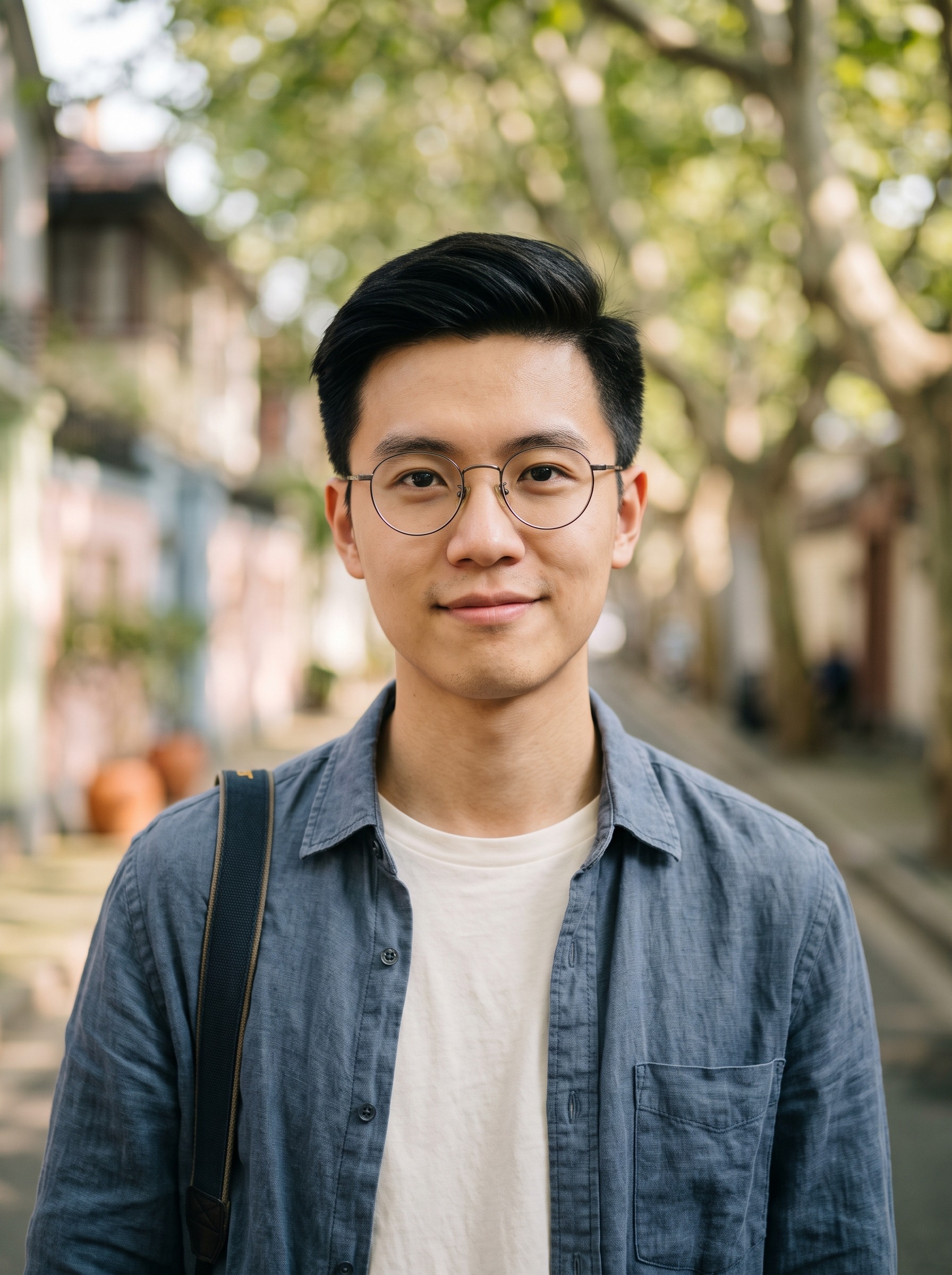
By Liang WeiReading Shanghai one lane at a time
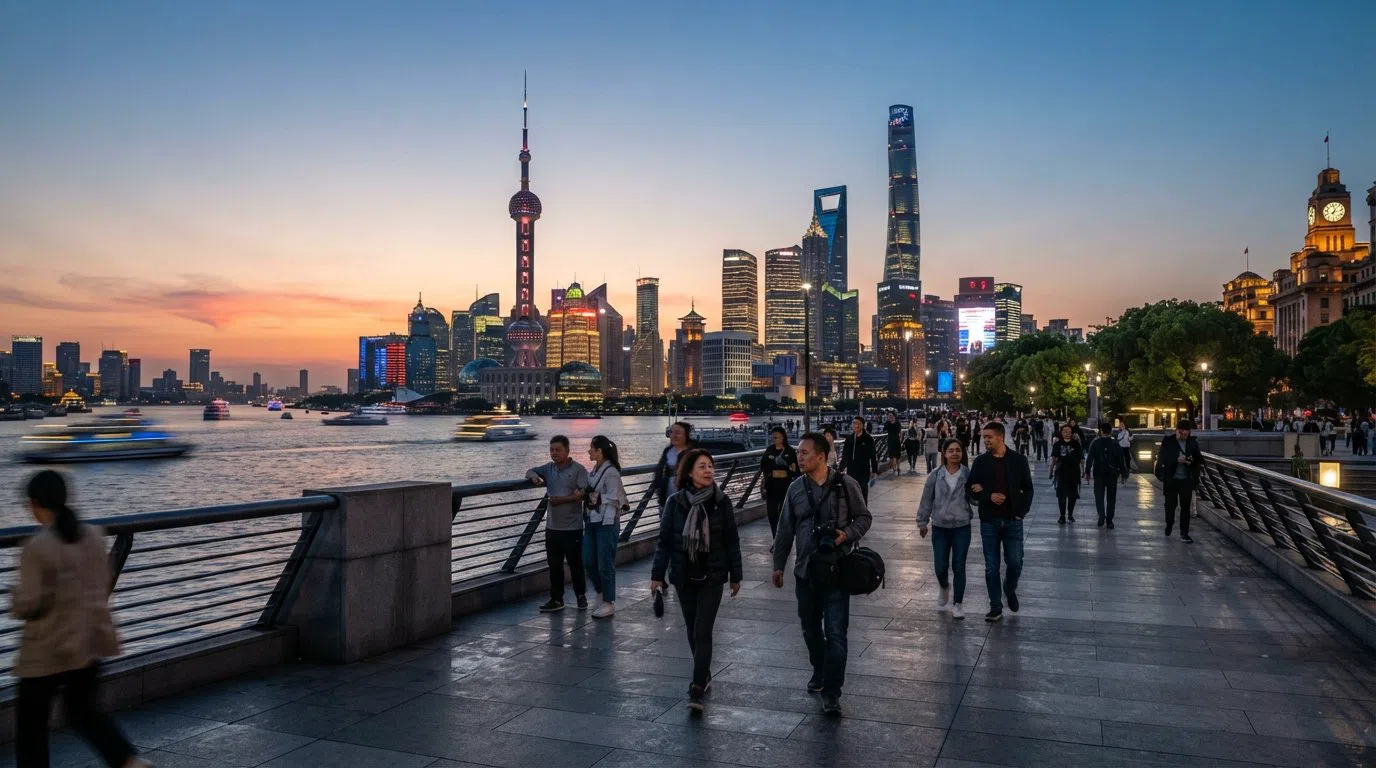
Cross the Waibaidu Bridge from the Bund and the city changes its breathing almost at once. The crowds thin, the river opens out, and Hongkou begins to speak in a lower register: breakfast steam, laundry poles, plane trees, the scrape of a stool on pavement. This is a district that wears its history plainly. It does not pose for you. It lets you find the wartime refugee story, the literary lanes, the old bridge, the new towers, and then asks you to notice the bowl of noodles beside them. That refusal to dress itself up is the point.
What Hongkou is known for
Hongkou’s story is layered, and the layers are still visible if you walk slowly enough. In the 1930s and 40s, the Tilanqiao area became the Restricted Sector for Stateless Refugees — the Shanghai Ghetto — where more than 20,000 Jewish refugees lived alongside Chinese neighbours after fleeing Nazi Europe. That history is not embalmed behind glass alone; it sits in the streets around Changyang Road, in a former synagogue, in the grain of the neighbourhood itself. Earlier still, the lanes around Duolun Road were part of a Japanese enclave of the International Settlement and a gathering place for leftist writers, most famously Lu Xun. The district has never been one thing for long.
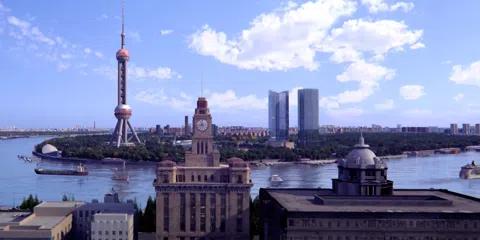
The bridge is the cleanest way into that story. The Waibaidu Bridge is Shanghai’s landmark 1907 steel truss span, and it sits where the Huangpu meets Suzhou Creek like a hinge between eras. On one side are the old riverfront names — Broadway Mansions and the former Astor House Hotel, now the China Securities Museum. On the other, the North Bund rises in glass and ambition, a newer skyline balcony built on the bones of dockland. The district can feel almost argumentative in that way: it insists that the past and the future occupy the same walk.
That tension is not abstract. It shows up in the daily rhythm. Inland, Hongkou is still a working district with long residential stretches, wet markets and local breakfast habits. Along the water, the mood turns polished, with office towers and a Raffles City complex that looks as if it arrived from another decade entirely. A few blocks away, slippers still sit on the pavement outside lane houses. The district keeps both registers in earshot.
Plan your Shanghai trip
Live prices from our booking partners.
Guests & rooms
Free cancellation on many rooms. We may earn a commission when you book.
Where to eat & drink
Hongkou eats like a local district because it is one. The morning ritual is simple and unshowy: cong you bing, jianbing, soy milk from a corner griddle, then on to work or errands. It is the sort of breakfast that tells you more about a neighbourhood than a guidebook ever could. There is no need to romanticise it. The food is everyday, cheap, and deeply embedded in the pace of the streets.
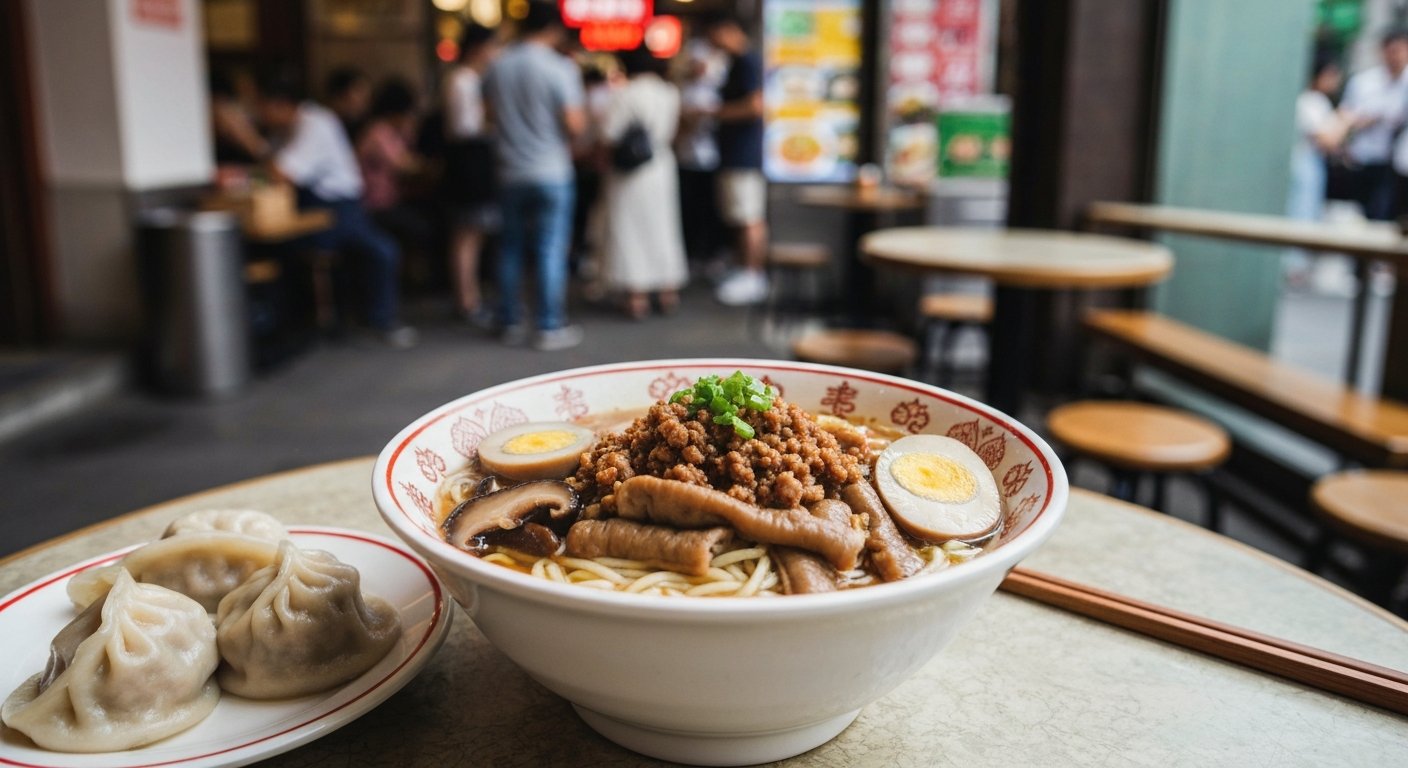
San Lin Tang is the place to sit down and let that logic deepen into lunch. Running since 1981 and now at 226 Hengshui Lu, this family noodle-and-dumpling shop has become the local benchmark for a reason. The loaded “usual” bowl, around ¥52, comes piled with minced pork, braised intestine, kaofu, egg and mushrooms, with fat pork-and-shepherd’s-purse dumplings on the side. Go before 11:30am or you will queue with office workers, which is its own kind of endorsement. There are restaurants you seek out for spectacle; San Lin Tang is the opposite, and that is why it matters.
At the polished end of Hongkou’s table, the North Bund has become a genuine dining address. Yong Fu (Hongkou), high in the East Tower of Raffles City The Bund, holds a Michelin star for refined Ningbo seafood, with the Pudong skyline filling the windows. The room matters here: it is part of the meal, a reminder that Hongkou now serves the river as well as the lane. If San Lin Tang is about continuity, Yong Fu is about the district’s newer confidence.
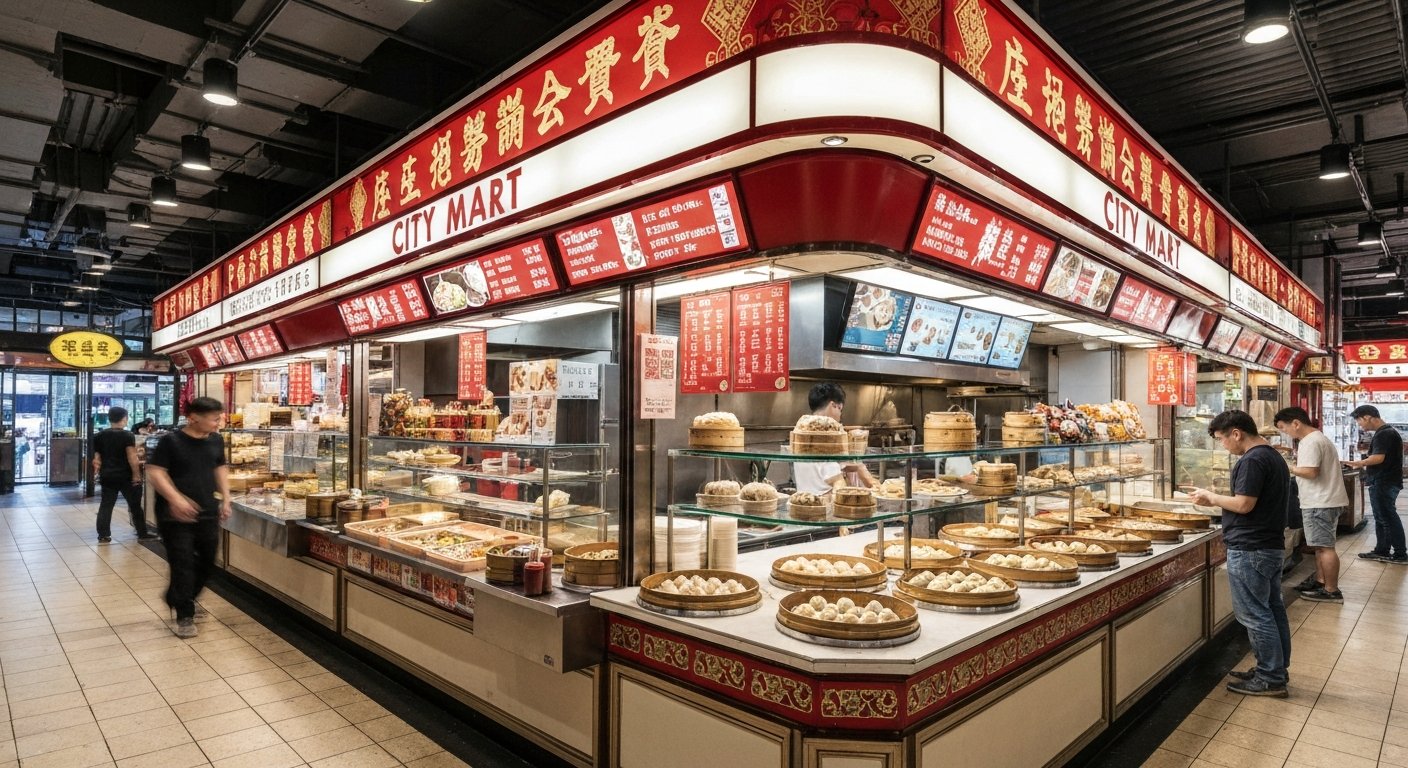
For something between those two moods, and for a little nostalgia, head to City Mart in the basement of Raffles City The Bund. This recreated old-Shanghai food hall gathers heritage names like Dahuchun and Xiandelai under one retro roof. You can graze for a few RMB, or build a full meal for under ¥100, which makes it one of the most useful food stops in the district. It is less a food court than a compact argument for Hongkou’s culinary range: the city’s memory, packaged for lunch.
Then there is Old Film Cafe at 123 Duolun Road, where tea and coffee come with 1920s-30s Chinese films screening in the background. It is a small, specific pleasure, and Duolun Road is exactly the right street for it: literary, slightly archival, and never entirely in a hurry. Hongkou does not perform café culture in the way some Shanghai districts do. It lets a place like this feel like a footnote you are glad to have read.
Going out
Be honest with yourself about Hongkou after dark: this is not a going-out district. The residential lanes go quiet early, and there is no dense crawl of cocktail bars or clubs to move between. If your evening needs a scene, you will end up in Jing’an or back on the Bund. Hongkou’s night life is thinner, more dispersed, and much more interested in the river than in itself.
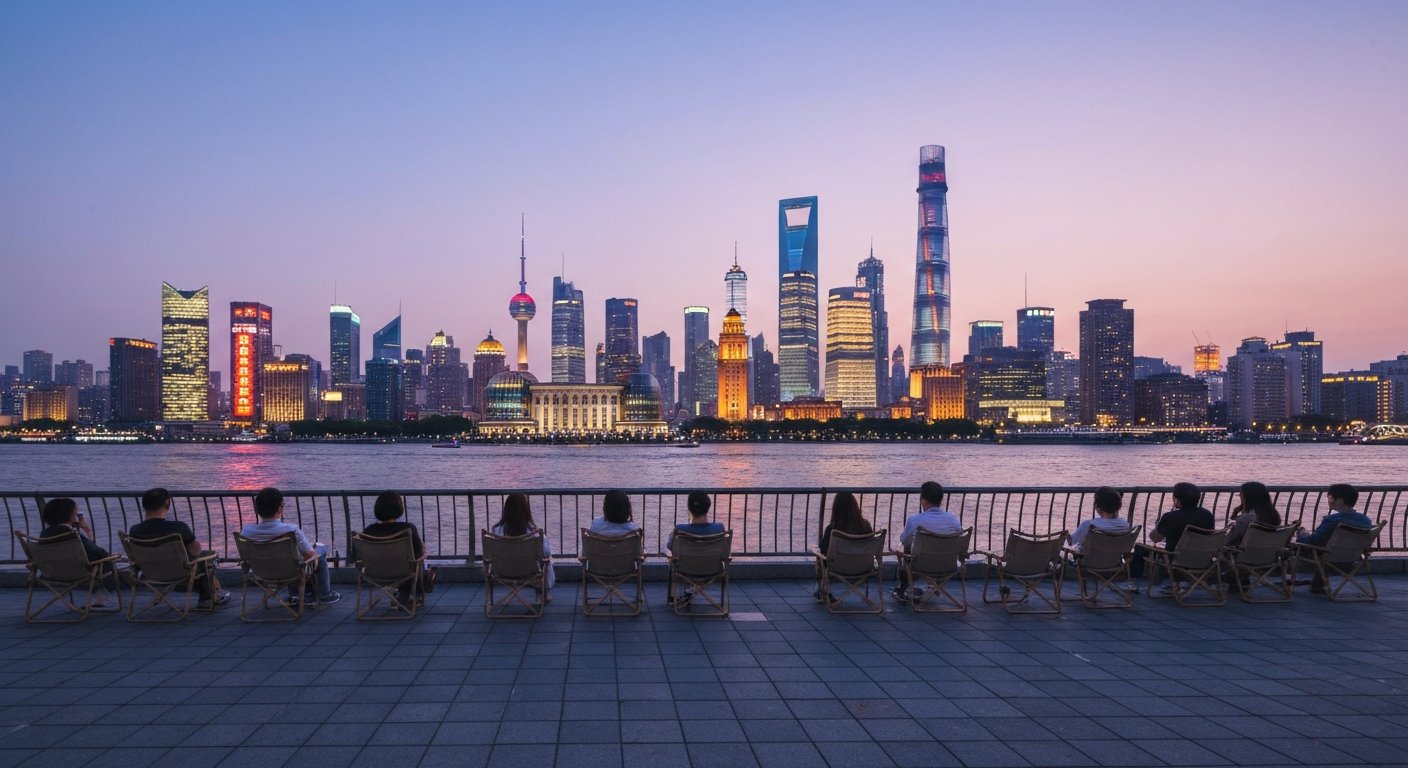
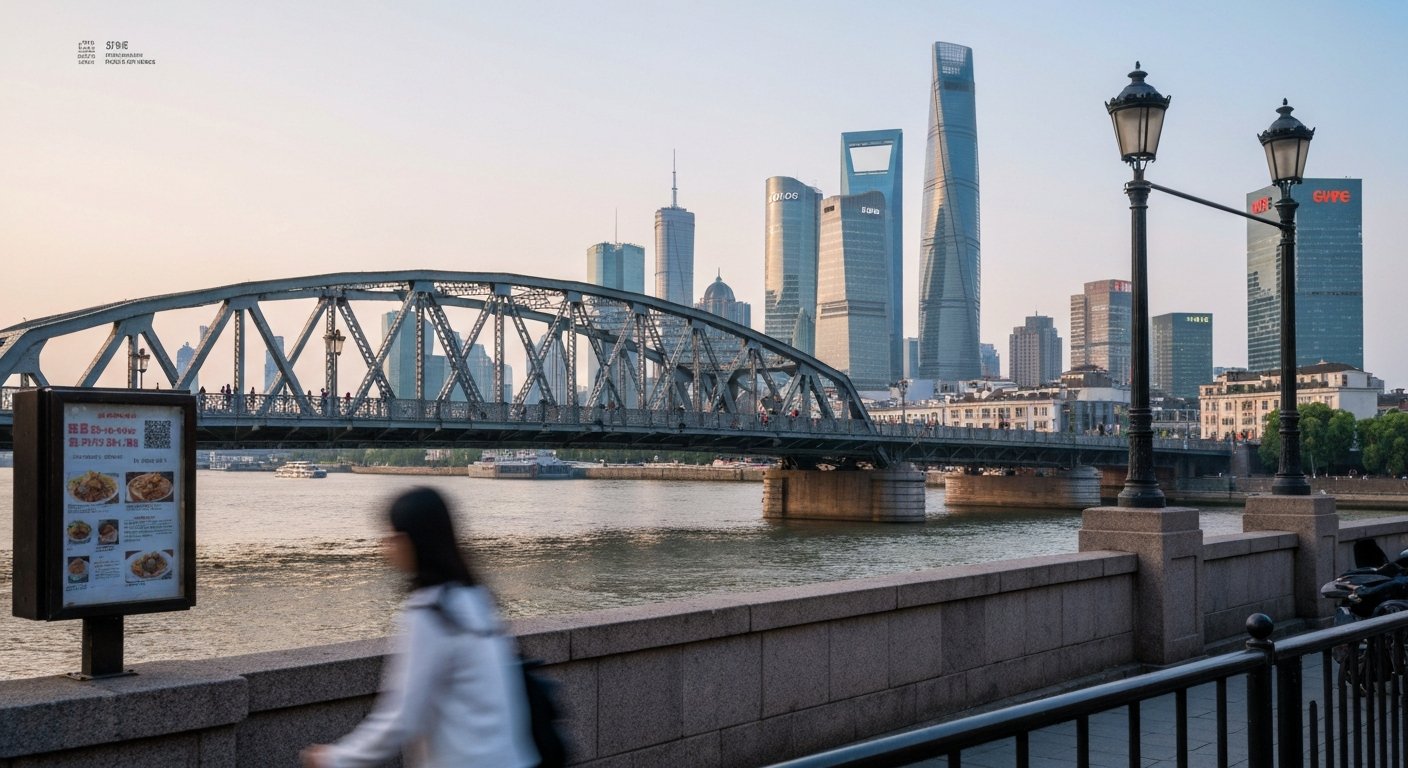
That said, the river is enough. The North Bund riverside promenade is arguably the best free show in the neighbourhood once the Lujiazui towers switch on their light display. Locals bring folding chairs. Couples take photos. The whole 2.5-kilometre stretch feels like an open-air lounge without the bar tab. It is one of those Shanghai experiences that is better because nothing is being sold to you apart from the view.
For a drink with that view, the hotel bars and the Raffles City rooftop garden give you a terrace over the water. The Stage at Sinar Mas Plaza goes one step further: a 320-metre open-air observation deck with sunset tickets that include a glass of sparkling wine or an Aperol Spritz. It opened in April 2025, and the height changes the district’s scale. From up there, Hongkou’s older streets seem almost modest, which is part of the point. The neighbourhood has learned to look both inward and outward.
Things to do / what to see
Start with the water, because Hongkou’s riverfront is the clearest expression of its new ambition. The North Bund riverside promenade runs roughly 2.5 kilometres between Qinhuangdao Road and the Waibaidu Bridge, and it is built for walking, jogging and cycling. It is wide, uncluttered, and far less crowded than the main Bund. The view of Lujiazui is cleaner here too, with fewer elbows in frame and more sky above the towers. It peaks at dusk, when the river darkens and the skyline begins to glow.
At the aerial end of that experience is The Stage at Sinar Mas Plaza, 501 Dongdaming Road. Tickets are around ¥230, and the deck opened in April 2025 as an open-air platform 320 metres up. It is the kind of viewpoint that can flatten a city into a postcard, but Hongkou resists that simplification. From above, you can still read the old dockland logic of the river edge, the newer towers, and the older streets inland, all in one glance.
Don’t miss in Hongkou
Exploring the Shanghai Jewish Refugees Museum.
Strolling through Lu Xun Park to watch locals practice calligraphy.
Walking along the historic Duolun Road Cultural Street.
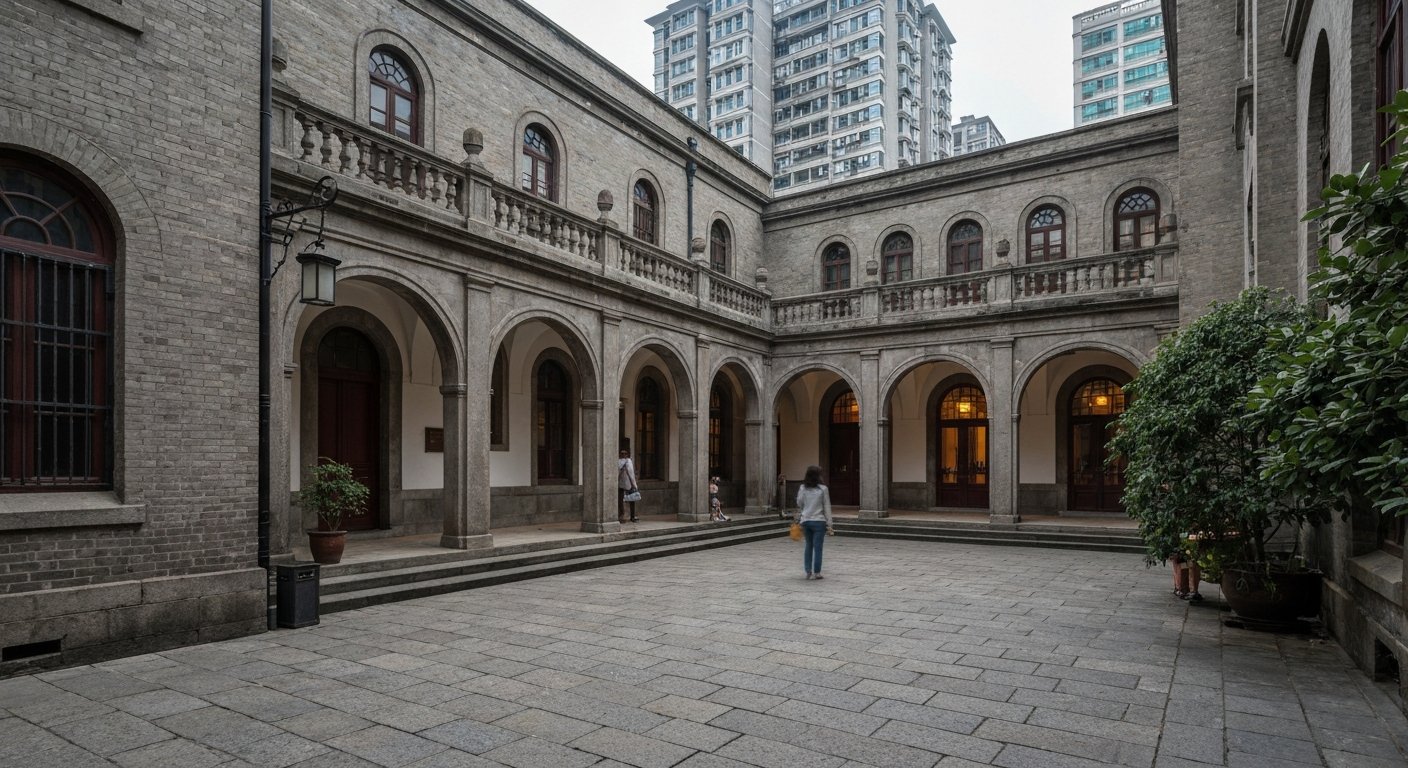
Inland, the district turns historical without becoming static. The Shanghai Jewish Refugees Museum at 62 Changyang Road costs ¥20 and closes on Mondays. It is built around the former Ohel Moshe Synagogue and tells the story of the wartime Shanghai Ghetto through restored space and personal archives. The museum is moving because it is specific; it does not generalise suffering into a grand narrative. It keeps the scale human.
Duolun Road is only 550 metres long, but it carries a lot of the district’s literary memory. This pedestrian cultural street was once a lane of leftist writers, and today it is lined with old bookshops, the striking Hongde Tang church, and the film-themed Old Film Cafe. It is a place for slow looking rather than checklist visiting. The street’s value is in its texture: the way a bookshop window, a church façade and a café screening old films can sit together without making a fuss about it.
A short walk north, Lu Xun Park and Lu Xun Memorial Hall offer a different kind of pause. The park is free, and it holds the writer’s tomb, the museum, and a classic morning tai chi scene. Come early if you want to see the district at its most local: retirees moving through forms, choir groups gathering, the day warming up around them. It is one of the most ordinary and revealing scenes in Hongkou, which is to say one of the best.
Then there is 1933 Old Millfun at 611 Liyang Road, a free-to-enter Art Deco former abattoir reborn as a spiralling maze of studios, galleries and cafes. The concrete ramps and curves are the draw, even before the tenants inside. It is one of those Shanghai buildings that makes you feel the city’s industrial past as architecture rather than as nostalgia. Hongkou is full of such conversions now, but this one still has the power to stop you mid-step.
Shopping
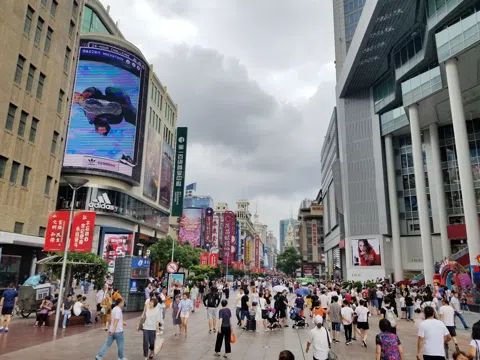
Hongkou’s shopping is functional and local rather than destination retail, which suits it. North Sichuan Road is the district’s traditional mid-market spine, a long, busy stretch of malls, department stores, snack stalls and everyday clothing. It is not trying to seduce you. It simply keeps the neighbourhood running. If you want to feel Hongkou’s ordinary commercial pulse, this is where to stand for a while and watch people come and go with shopping bags and takeaway cups.
For something more browsable, Duolun Road trades in art supplies, antiques, old books, jade and curios. It is souvenir hunting with a literary backdrop rather than a hard sell, which makes the browsing feel gentler and more local. Nearby, Raffles City The Bund on Dongdaming Road adds the modern option: international brands, a supermarket, the City Mart food hall in the lower levels, and a rooftop garden to decompress on afterwards. Between those three, you can move from street-level Shanghai to heritage curios to air-conditioned mall retail without leaving the district.
Where to stay in Hongkou
Hongkou is a value play with a river view. The smartest base is the North Bund, near the International Cruise Terminal and Raffles City, where newer four- and five-star hotels and serviced apartments give you the Lujiazui skyline and quick access across the Waibaidu Bridge to the main Bund, usually for less than equivalent rooms on the south side of the river. If you want the district’s newer face without giving up the old city entirely, this is the practical choice.
History lovers can stay at the Broadway Mansions Hotel, the 1934 Art Deco tower right at the bridgehead, for a period address with cross-river views. Further inland around North Sichuan Road and Lu Xun Park, mid-range and budget hotels sit in genuinely residential neighbourhoods on metro Lines 3, 8 and 10, trading walkable nightlife for authenticity and lower prices. Pick the North Bund if skyline and connectivity matter most; pick the inland pockets if you want to live among locals and stretch your budget.
Hotels in Hongkou
Our best-rated stays in this neighbourhood. Prices are approximate “from” rates — confirmed at the provider when you continue. We may earn a commission if you book through our partners — at no extra cost to you.
In this area In this area
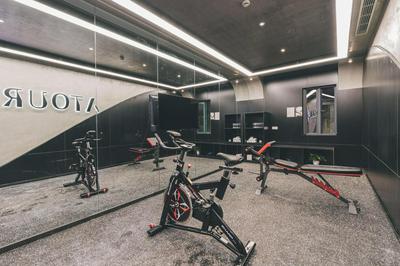 In this area
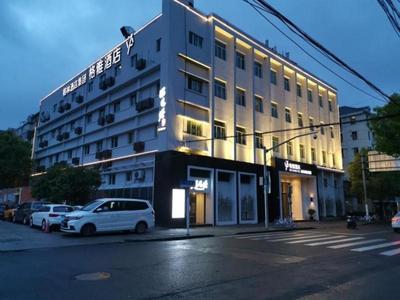 In this area
Getting around
Hongkou is well covered by the metro, with Lines 3, 4, 8, 10 and 12 all running through the district. Line 12 is the key one for the historic core: Tilanqiao for the Jewish Refugees Museum, International Cruise Terminal for the North Bund and Raffles City. Lines 3 and 8 stop at Hongkou Football Stadium for Lu Xun Park and the top of Duolun Road, while Line 10 hits North Sichuan Road for the shopping spine. The southern edge sits right on Suzhou Creek, so you can cross the Waibaidu Bridge on foot and be on the main Bund in about ten minutes.
The riverside promenade is flat and made for walking or bike-share, and the inland lanes reward that same pace. Hongkou is not a district to rush through. Its best details are the ones you notice when you slow down: the breakfast griddle in the morning, the quiet of the residential streets at night, the bridge, the museum, the noodle shop, the new tower rising behind the old line of trees.
Gallery
Hongkou in pictures
Hongkou — your questions
Is Hongkou a good area to stay in Shanghai?
Yes, especially if you value history, river views and better prices than the south side of the river. The North Bund gives you newer hotels, skyline access and a short walk across the Waibaidu Bridge to the main Bund. The trade-off is a thinner nightlife scene and long residential stretches.
What is Hongkou best known for?
History and the river. It was home to the wartime Shanghai Ghetto, now remembered at the Shanghai Jewish Refugees Museum in the former Ohel Moshe Synagogue, and to literary Duolun Road and Lu Xun Park. The North Bund adds the Waibaidu Bridge, 1933 Old Millfun and the new Stage observation deck.
Is there good food in Hongkou?
Yes, though it leans local rather than flashy. Think street breakfasts, scallion pancakes, jianbing and a proper bowl at San Lin Tang on Hengshui Lu. For something smarter, Yong Fu in Raffles City serves Michelin-starred Ningbo seafood, while City Mart gathers heritage Shanghai vendors under one roof.
What should I see if I only have half a day?
Do the Shanghai Jewish Refugees Museum, walk Duolun Road, then finish at the North Bund riverside promenade or The Stage for the skyline. If you have time left, cross the Waibaidu Bridge and let the district’s older streets pull you inland.