Nearby
The Shanghai issue
Lujiazui, Shanghai: the skyline district that learned to look back
Shanghai's most vertical neighbourhood is all towers, decks and river views — a polished financial quarter where the city goes up to be seen.
By Liang WeiReading Shanghai one lane at a time
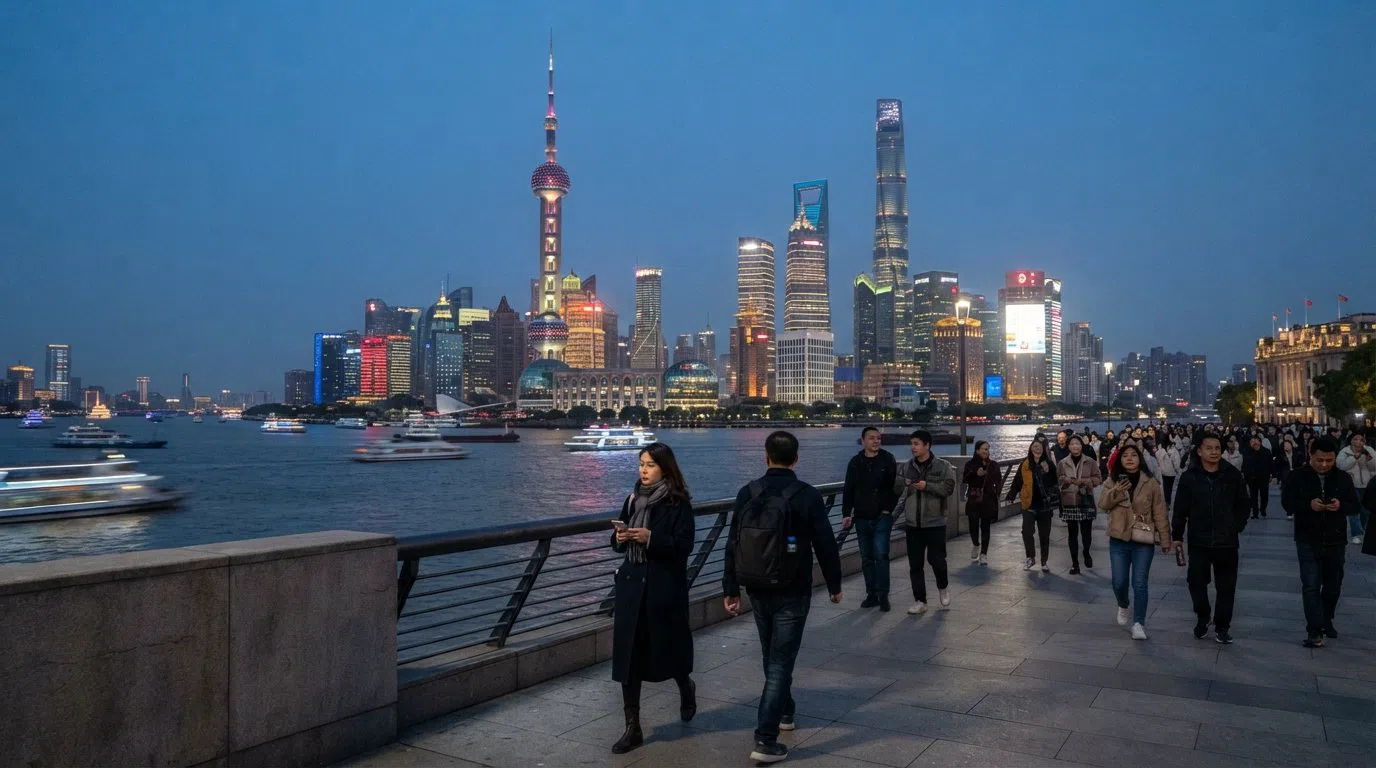
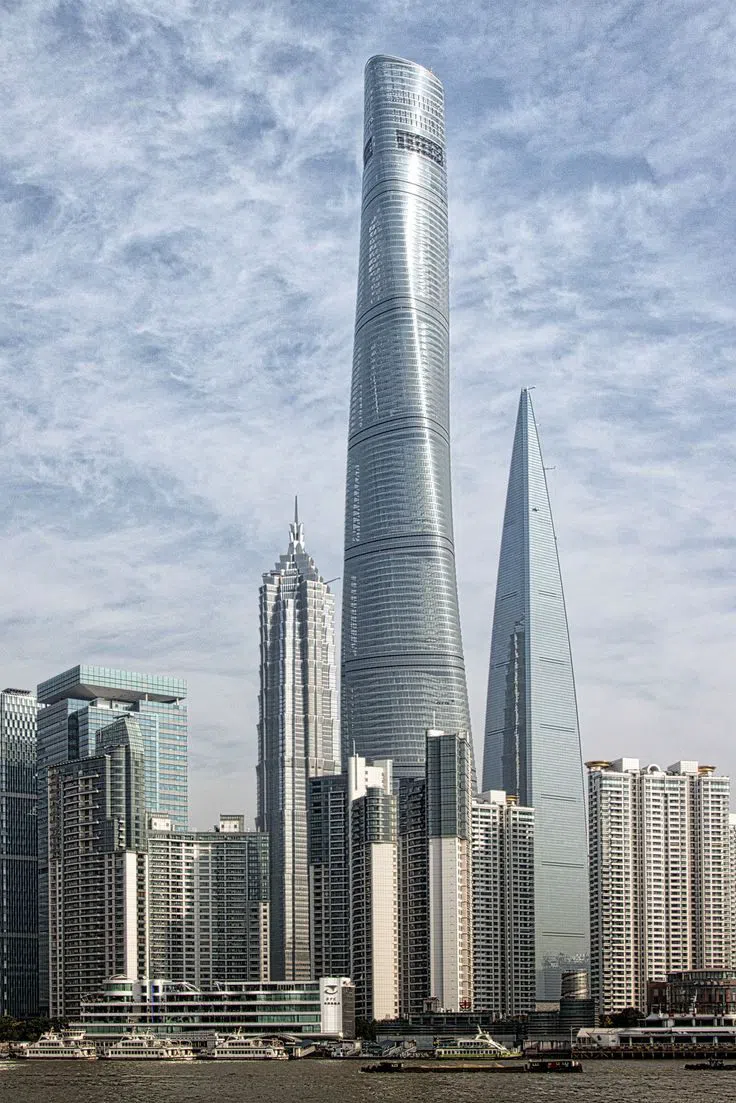
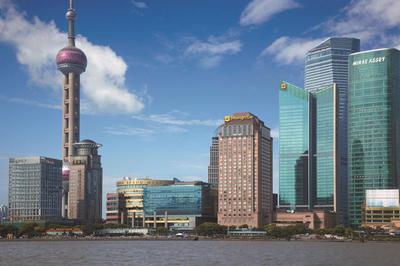
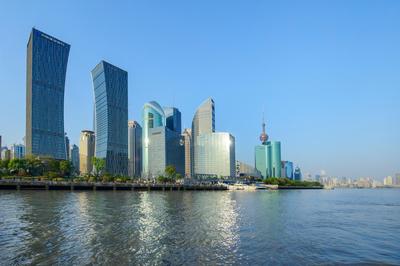
Three of China’s tallest buildings stand within a five-minute walk of each other here, on a bend of the Huangpu that was farmland and warehouses only four decades ago. That fact still lands best when you arrive on foot and the district rises around you in pieces: a sphere, a needle, a bottle opener, then the 632-metre Shanghai Tower stepping over everything else. Lujiazui is Shanghai in a hard, engineered key — a place of observation decks, glass bridges and hotel bars where the view is the main event, and the city below is mostly something to cross quickly and admire from above.
What Lujiazui is known for
Lujiazui is the skyline, but not in the lazy sense of a postcard pasted onto a financial district. It is a compact cluster of towers that chart the city’s rush upward in three decades: the 468-metre Oriental Pearl Tower, the 421-metre Jin Mao Tower, the 492-metre Shanghai World Financial Center, and the 632-metre Shanghai Tower. Each one has its own silhouette, its own era, its own idea of what modern Shanghai should look like. Together they read like a timeline drawn in steel and glass.
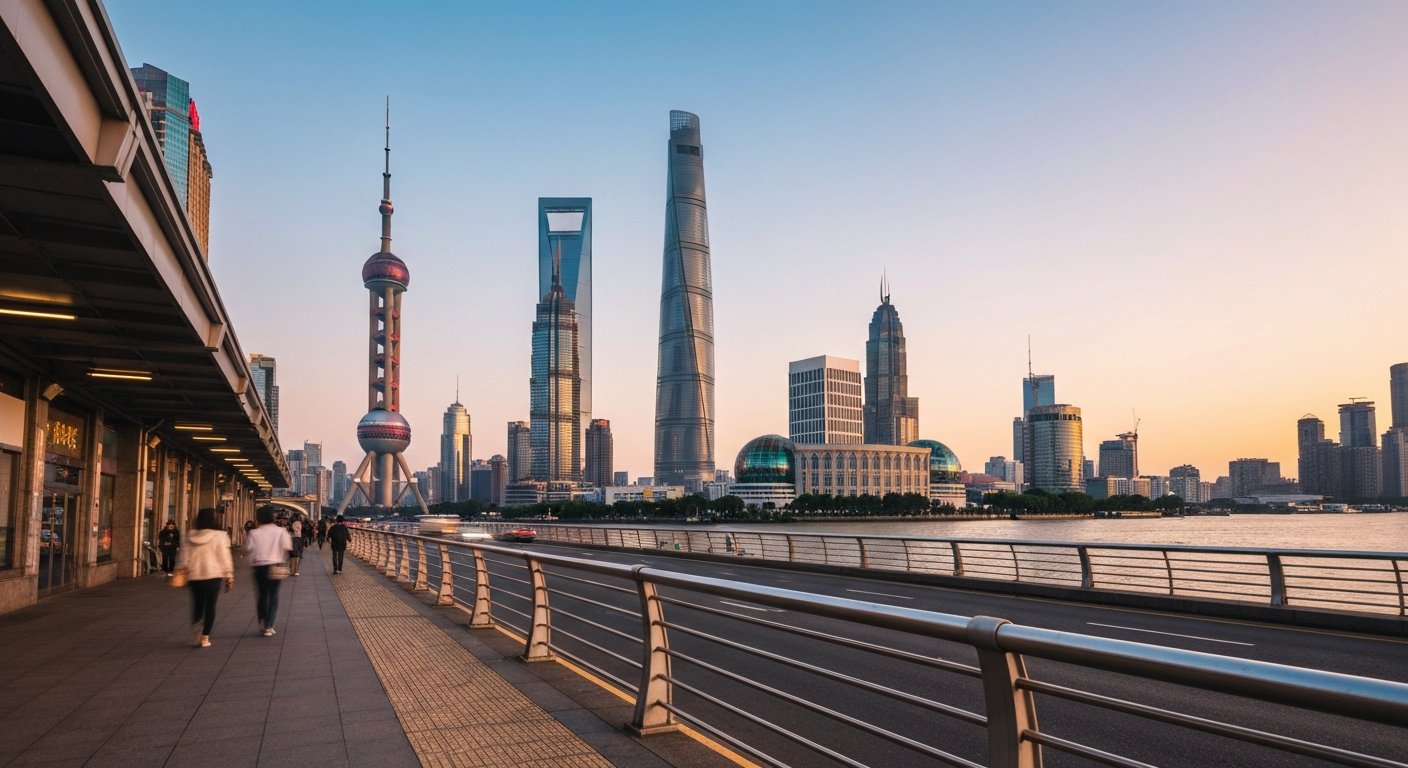
The district’s first impression is scale. Roads are wide enough to make you feel briefly misplaced; the pedestrian realm is lifted, looped and channelled so that you spend as much time above traffic as beside it. That engineering is part of the experience. The raised circular footbridge, the mall tunnels, the clean edges of the river promenade — all of it keeps the district legible from a distance and slightly disorienting at street level. It is corporate and polished rather than lived-in, and that is the point. This is where Shanghai performs altitude.
What keeps it from becoming a pure office set is the way the towers invite you in. Almost every major one can be climbed, and that changes the mood from mere looking to a kind of urban inventory. The Shanghai Tower offers the world’s highest interior observation deck on the 118th floor, reached by one of the fastest lifts on the planet. The World Financial Center counters with its 100th-floor glass SkyWalk, a transparent floor 474 metres up. The Oriental Pearl Tower, the oldest and most familiar of the group, adds glass-floored galleries, a revolving restaurant and the Shanghai History Museum in its base. Lujiazui is one of the rare places where the skyline is not just scenery; it is the product on sale.
Clear weather matters here more than almost anywhere else in the city. Haze will flatten the whole exercise, and a bad afternoon can make even the tallest deck feel like a fogged-up window. Book timed tickets if you can, and come when the light is clean. The district rewards planning, which is another way of saying it rewards patience.
Plan your Shanghai trip
Live prices from our booking partners.
Guests & rooms
Free cancellation on many rooms. We may earn a commission when you book.
Where to eat & drink
Dining in Lujiazui mostly means dining high, and the height is not a gimmick so much as the organising principle of the neighbourhood. At the top of the Ritz-Carlton Shanghai, Pudong, Jin Xuan holds a Michelin star and the sort of calm, exacting Cantonese room that makes sense only when the city is spread out below you. The menu leans into imported black cod, roast meats and a serious dim sum spread, with Bund-facing glass doing half the work of the room. It is the kind of place that reminds you that a view can be a seasoning.
Just across the tower cluster, the Grand Hyatt’s dining rooms in Jin Mao make a small vertical city of their own. ON56, on the 56th floor, runs an all-day buffet with 270-degree windows and live stations from sashimi to wok; Canton, on the 55th floor, handles contemporary Cantonese; and The Grill covers prime-grade steaks and fresh seafood. The appeal here is not intimacy. It is the sensation of being suspended above the river while a hotel kitchen moves with the confidence of a well-drilled machine.
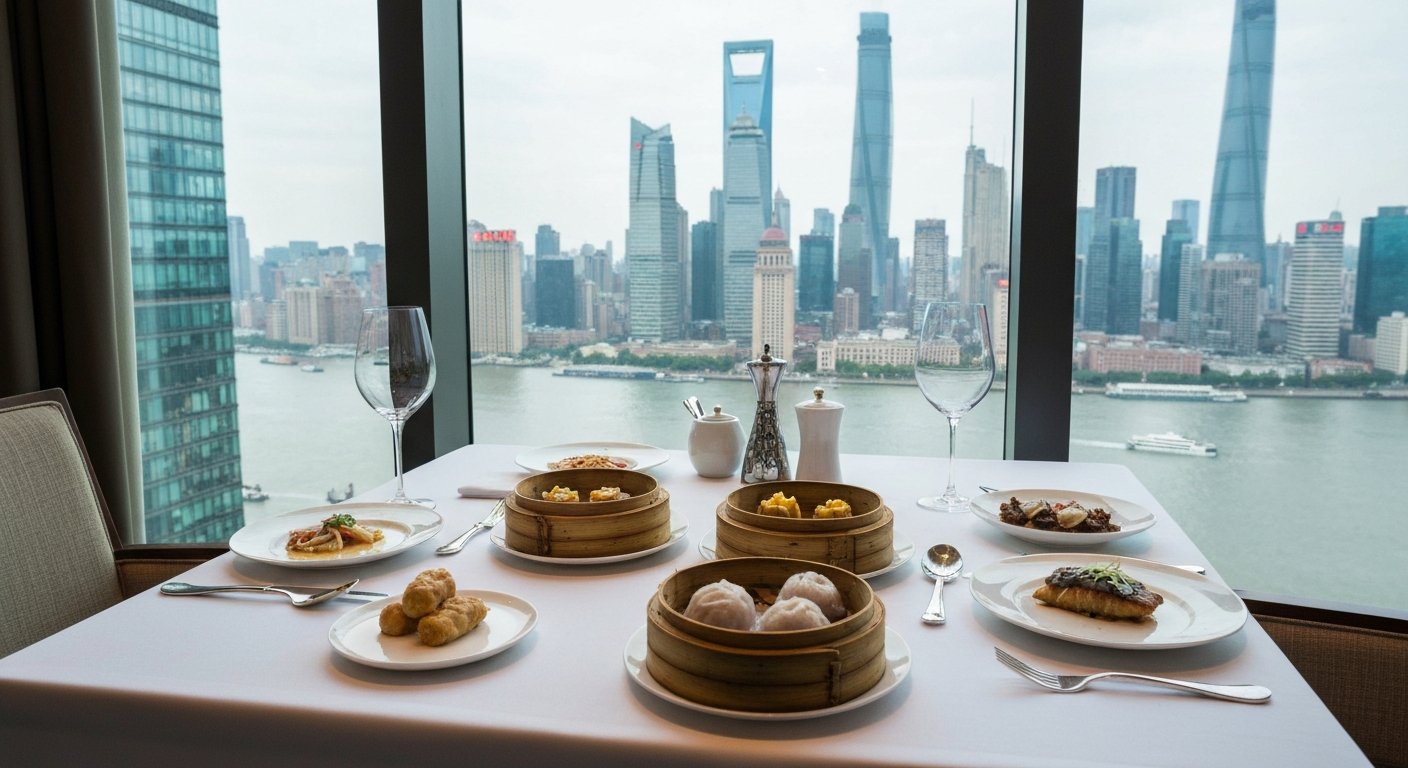
Higher still, Heavenly Jin sits on the 120th floor of the Shanghai Tower inside the J Hotel, holding a Guinness record as the highest restaurant in a building. The cuisine is Huaiyang, delicate and precise, and the setting is so far above the street that the idea of dinner becomes almost abstract. You go for the novelty, of course, but also for the peculiar hush that altitude can create.
You do not have to spend at that level to eat well here. Inside the Shanghai IFC Mall, Din Tai Fung is the reliable stop for xiao long bao and Shanghainese classics, with soup dumplings running roughly 50 to 80 RMB. Yang’s Dumplings does the city’s benchmark pan-fried shengjian bao for a few RMB, the sort of quick bite that reminds you that even a district of towers still runs on steam, dough and lunch breaks. These are not atmospheric lane snacks — Lujiazui does not really do that — but they are honest, quick and close to the metro.
The drinking scene follows the same vertical logic. There is no sprawl of street bars here, no loose cluster of places spilling onto a sidewalk. Instead, the neighbourhood gives you one memorable drink at height and asks you to be content with that. In Lujiazui, the cocktail is part of the view.
Going out
Flair, on the 58th floor of the Ritz-Carlton Shanghai, Pudong, is the place people come to watch the city turn luminous. It is the highest rooftop bar in Shanghai and one of the highest open-air terraces in China, designed by Super Potato with a lounge-loft feel indoors, a sushi bar, pan-Asian tapas and a terrace that looks straight at the Oriental Pearl Tower with the Bund and the river curling behind it. It runs over-18s only in the evening, from around 5.30pm until 1am on weekdays and 2am on weekends, and the best seat is the one facing the light shift at dusk.
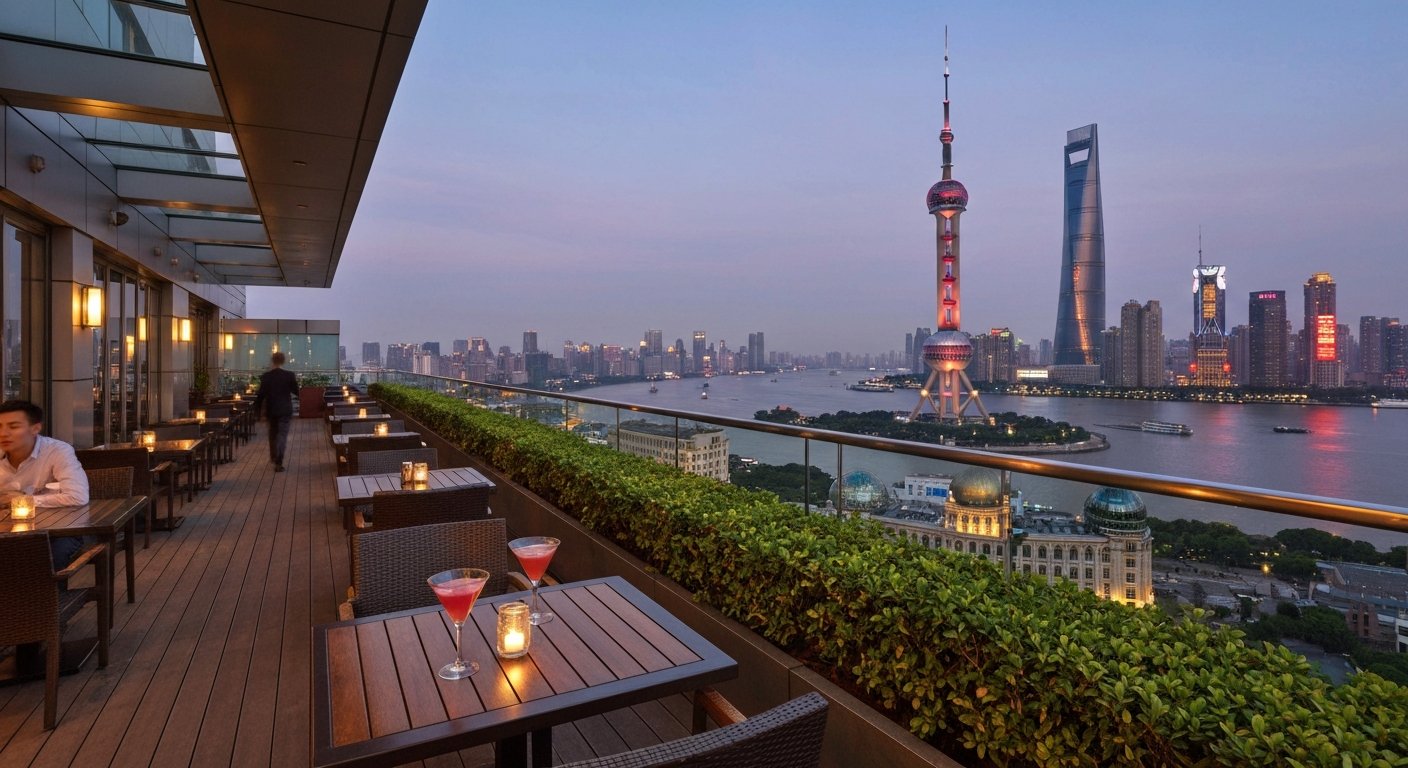
Cloud 9, on the 87th floor of Jin Mao Tower at the Grand Hyatt, is a different mood: champagne, cocktails and a 360-degree view that makes the whole city feel diagrammed. It is less about terrace drama than about the sensation of hovering inside the skyline itself. Newsweek once called it one of the world’s great gathering places, and that feels right in the specific, polished way these hotel bars do. People come to mark an occasion, or to borrow one.
If you want a proper crawl, with strangers and small clubs and the chance to drift between several rooms in one evening, cross the river. Lujiazui’s after-dark life is not built for wandering. It is built for arrival, for one elevated drink, for a view that does not need company.
Things to do / what to see
The obvious move is to go up. The Shanghai Tower Observation Deck on the 118th floor gives you the widest sweep and the cleanest argument for the district’s scale. The lift is part of the theatre, moving so quickly that the city seems to disappear between floors. The deck itself is the sort of place where you spend more time looking for familiar landmarks than at the deck’s own design. That is fine. The point is to read Shanghai from above.
The Shanghai World Financial Center Observatory is the stronger choice if you want a little tension with your view. The 100th-floor glass SkyWalk, with its transparent floor 474 metres up, turns looking down into an event. It is the building everyone still calls the bottle opener, and the nickname suits the tower’s odd, useful shape. There is something more mischievous about it than the Shanghai Tower’s clean verticality.
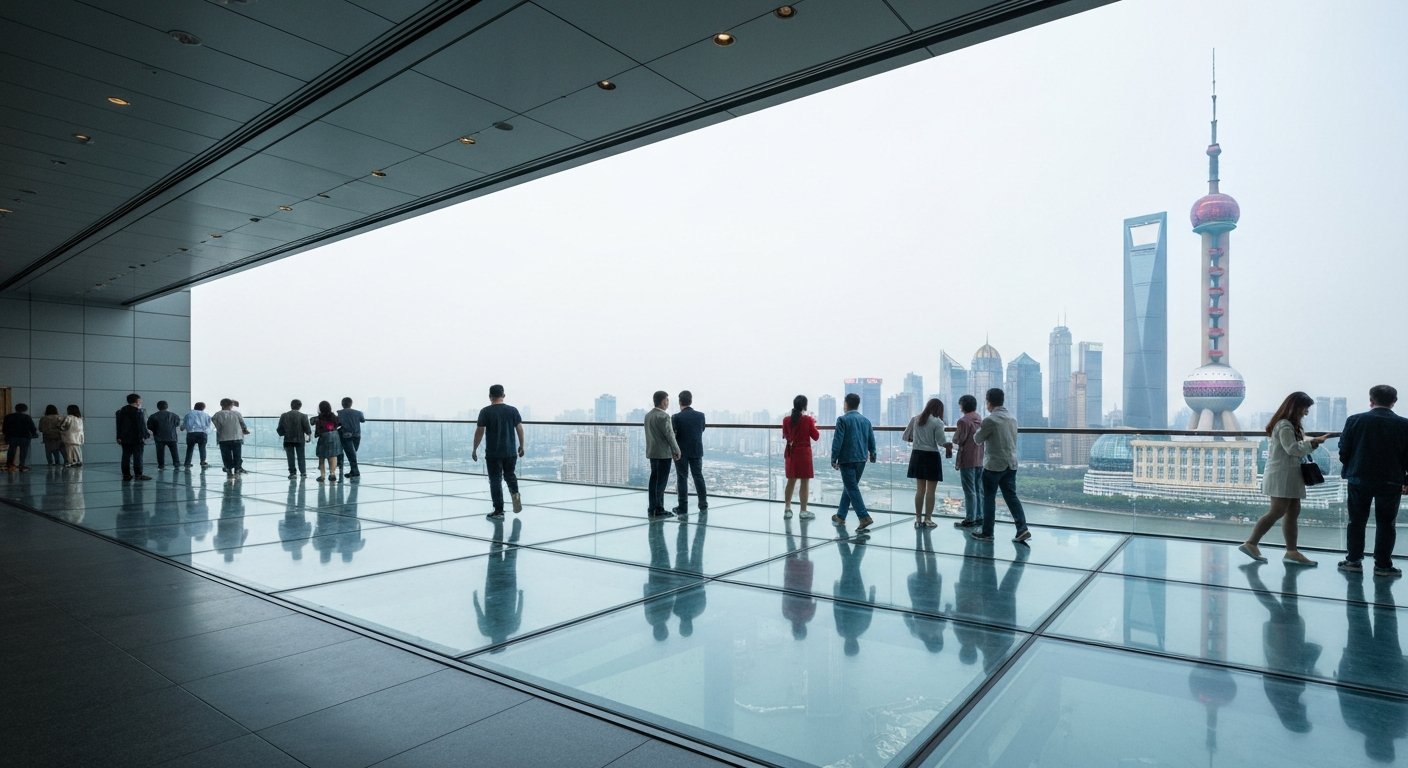
The Oriental Pearl Tower remains the family favourite, partly because it is the oldest of the big four and partly because it gives you more than one reason to go: glass-floored galleries, the space-capsule lift, and the Shanghai History Museum in the base, which traces the city’s leap from treaty port to megacity. It is the most playful of the towers, the one that understands that a skyline can be both civic monument and souvenir.
Back at street level, the Lujiazui Ring Road Circular Footbridge is one of those small urban inventions that quietly define a place. It is a raised, curving pedestrian loop above the roundabout, and from it the towers line up in a way you cannot quite get anywhere else at ground level. The bridge links the malls and the towers and gives you a clean, traffic-free 360-degree sweep of the district. Follow the signs from Lujiazui metro Exit 6, and the city starts to make a little more sense.
Then there is the Bund Sightseeing Tunnel, gloriously kitsch and completely unnecessary in the best way. It runs under the Huangpu between Lujiazui and the Bund, all flashing LEDs, trippy projections and a solemn recorded narration. It costs about 50 RMB and takes five minutes. No one takes it because it is efficient. They take it because it is ridiculous, and because Shanghai occasionally likes to be seen enjoying its own excess.
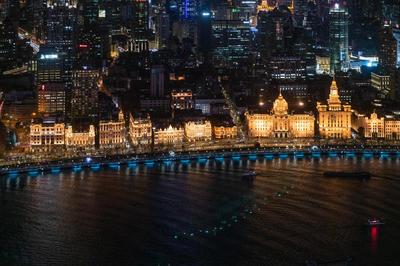
Binjiang Avenue is the quieter counterpoint. The 2.5-kilometre riverside promenade is where locals actually go, especially at dusk, when the lights across the water begin to come on and the Bund turns into a line of gold. It is free, calmer than the opposite bank, and perhaps the best place in the district to understand that Lujiazui is not just about looking out. It is about being looked at from across the river.
Don’t miss in Lujiazui
Ascending to the observation deck of the Shanghai Tower.
Walking the elevated pedestrian ring road above the traffic.
Shopping at the luxury flagship stores in the IFC Mall.
Shopping
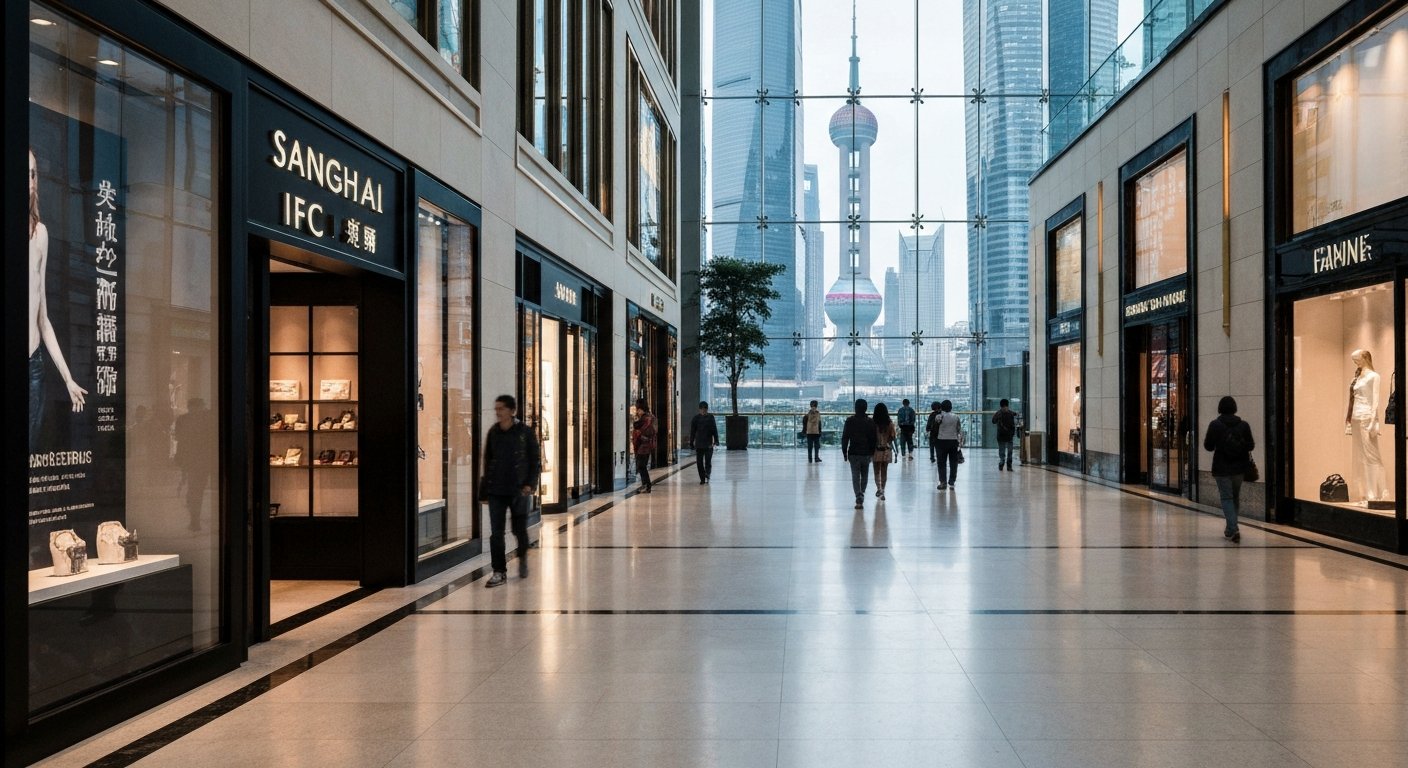
Shopping here is mall shopping, done at the top end and with the skyline visible through the glass. The Shanghai IFC Mall sits on the southeast corner of the Lujiazui roundabout and connects straight to the metro at basement level, which makes it the district’s most efficient machine for luxury consumption. Six floors, more than 400 stores, Chanel, Dior, Louis Vuitton, Gucci and Hermes on the upper levels, plus a Citysuper food hall and Emperor Cinemas — it is a polished answer to the question of what a financial district should do when it wants to become a destination.
Across the road, Super Brand Mall is the broader, more everyday counterpart: a huge vertical centre with high-street brands, a cinema, family floors and its own branch of Din Tai Fung. The two are linked by the raised promenade and the ring bridge, so you can move between them without touching a road. That matters here. Lujiazui is not a neighbourhood of market stalls, lane shops or haggling. For that, you cross to Tianzifang or the antique markets of Puxi. What Lujiazui offers is air-conditioned, high-gloss, one-stop retail with the city spread out beyond the windows.
Where to stay in Lujiazui
Staying in Lujiazui means staying in the sky. The Grand Hyatt Shanghai occupies floors 53 to 87 of Jin Mao Tower around a dramatic atrium, the Ritz-Carlton Shanghai, Pudong sits above the IFC with Jin Xuan and Flair in the same vertical stack, and the J Hotel crowns Shanghai Tower near the top of the 632-metre building as one of the highest hotels on earth. All are firmly five-star and priced accordingly.
The appeal is obvious: river-facing rooms, direct metro access, and the sense that your hotel is also the neighbourhood’s main viewpoint. The trade-off is equally obvious. Once the offices empty, the district goes quiet. It is brilliant for views, the malls and a business base, but thin on street life after dark. If your Shanghai is about wandering lanes and bar-hopping, the French Concession or Jing’an will suit you better, and both are a short metro ride away.
Book high and face the river if you can. In Lujiazui, the room is part of the itinerary.
Hotels in Lujiazui
Our best-rated stays in this neighbourhood. Prices are approximate “from” rates — confirmed at the provider when you continue. We may earn a commission if you book through our partners — at no extra cost to you.
Nearby
Nearby
Nearby
Nearby
Nearby
Nearby
Nearby
Getting around
Lujiazui is compact and best crossed on foot once you are inside it, using the raised ring bridge to avoid the big roads. Lujiazui station on Metro Line 2 drops you in the middle of the district, with underground passages leading straight into IFC and the tower bases. Exit 6 is the one for the riverside promenade and the footbridge.
Line 2 is the workhorse here. Two stops west under the river brings you to Nanjing Road East for the Bund, and the line runs to People’s Square and out to both airports, with Hongqiao about 30 minutes away. Pudong International is reached via a change, while the Maglev launches from nearby Longyang Road at up to 300km/h. Taxis and ride-hailing are plentiful but slow in rush hour around the roundabout, so the metro is usually faster.
To reach the Bund on the opposite bank, you have three straightforward options: the metro under the river, the everyday Huangpu ferry from Dongchang Road pier for a couple of RMB, or the Bund Sightseeing Tunnel if you are in the mood for something cheerfully absurd. The ferry is the best value and the most scenic at dusk.
Gallery
Lujiazui in pictures
Lujiazui — your questions
Is Lujiazui a good area to stay in Shanghai?
Yes, if you want skyline views, sky-high hotels and easy metro access. The Grand Hyatt, Ritz-Carlton and J Hotel all have river-facing rooms and direct links into the district’s transport web. Just know it’s a polished, corporate base rather than a lively late-night neighbourhood.
Which tower has the best view in Lujiazui?
For raw height, Shanghai Tower’s 118th-floor deck wins: it’s the world’s highest interior observation deck. If you want more thrill, the World Financial Center’s 100th-floor glass SkyWalk is the pick. For families, the Oriental Pearl Tower is the most playful.
How do I get from Lujiazui to the Bund?
Three easy ways: Metro Line 2 under the river to Nanjing Road East; the Huangpu ferry from Dongchang Road pier for a couple of RMB; or the Bund Sightseeing Tunnel, which is more novelty than transport but memorable all the same.
What kind of traveller suits Lujiazui best?
First-timers chasing the skyline, travellers after observation decks and special-occasion dining, and business visitors who want direct metro access. If you want lanes, indie bars and street-food grazing, another part of Shanghai will suit you better.