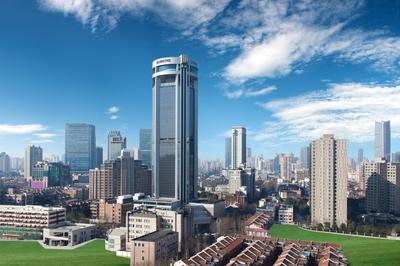
 In this area
The Shanghai issue
Former French Concession, Shanghai: plane trees, villas and bars
Shanghai’s most walkable quarter is a slow-burn of plane trees, garden villas, coffee counters and hidden cocktail doors, best read one lane at a time.
By Liang WeiReading Shanghai one lane at a time
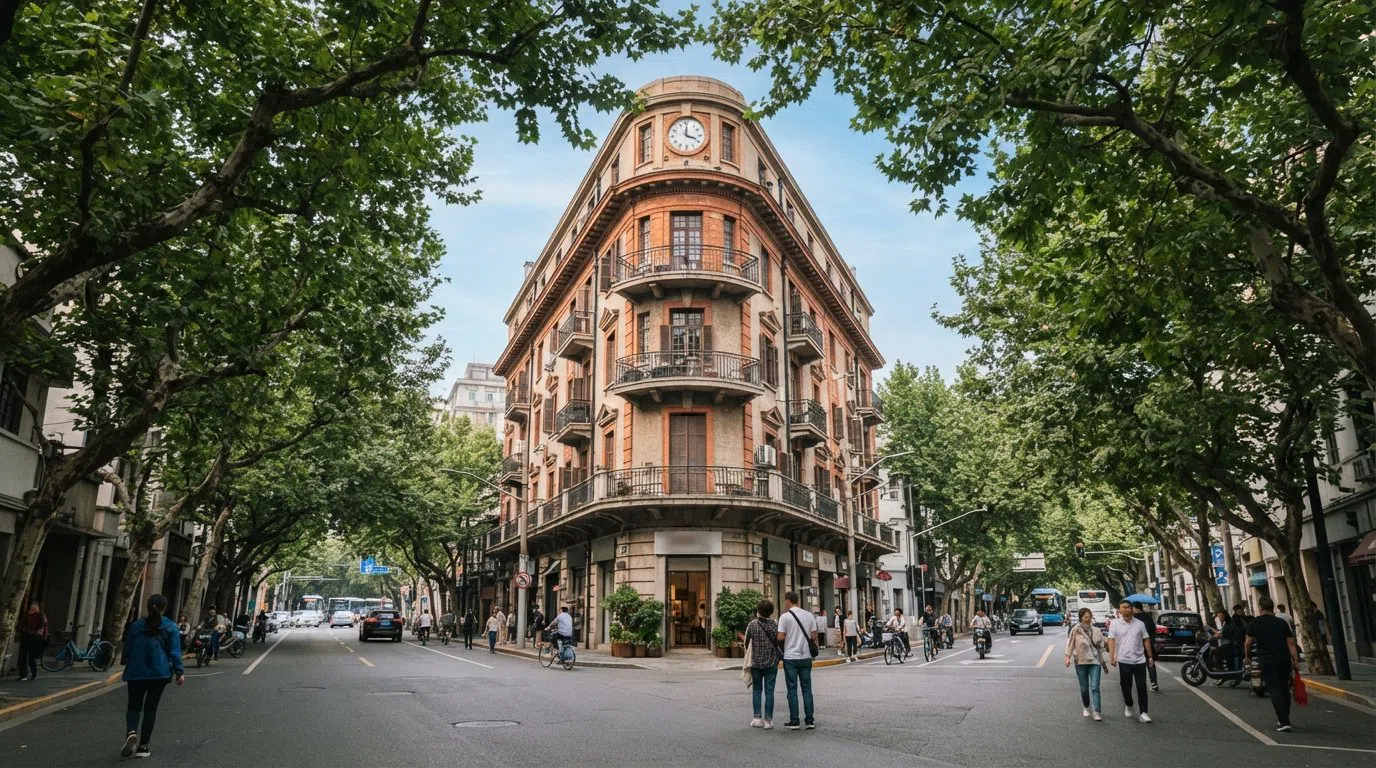
Route Ferguson is now Wukang Road, but the plane trees the French planted a century ago still meet overhead, and the wedge of the Wukang Mansion still cuts the southern end of the street like a ship arriving where no harbour is visible. That is the Former French Concession in miniature: not a monument to be ticked off, but a district that keeps unfolding at walking speed. You come for a coffee, a villa lane, a quiet lunch, a bar behind an unmarked door, and then find yourself staying until the light changes on the facades.
What the French Concession is known for
The first thing to understand is that the Former French Concession is not one neat district but a spread of streets across Xuhui and the western edge of Huangpu, laid out by the French administration from 1849 and expanded through the 1910s and 20s into Shanghai’s most desirable residential quarter. What survives is not a single preserved scene, but a texture: plane trees shading two- and three-storey garden villas, Art Deco apartment blocks, and lilong lane houses that now hold cafes, wine bars and boutiques where diplomats and film stars once lived. It is quieter and more human-scaled than the vertical roar of Lujiazui or the crowds on the Bund, and that calm is the point.
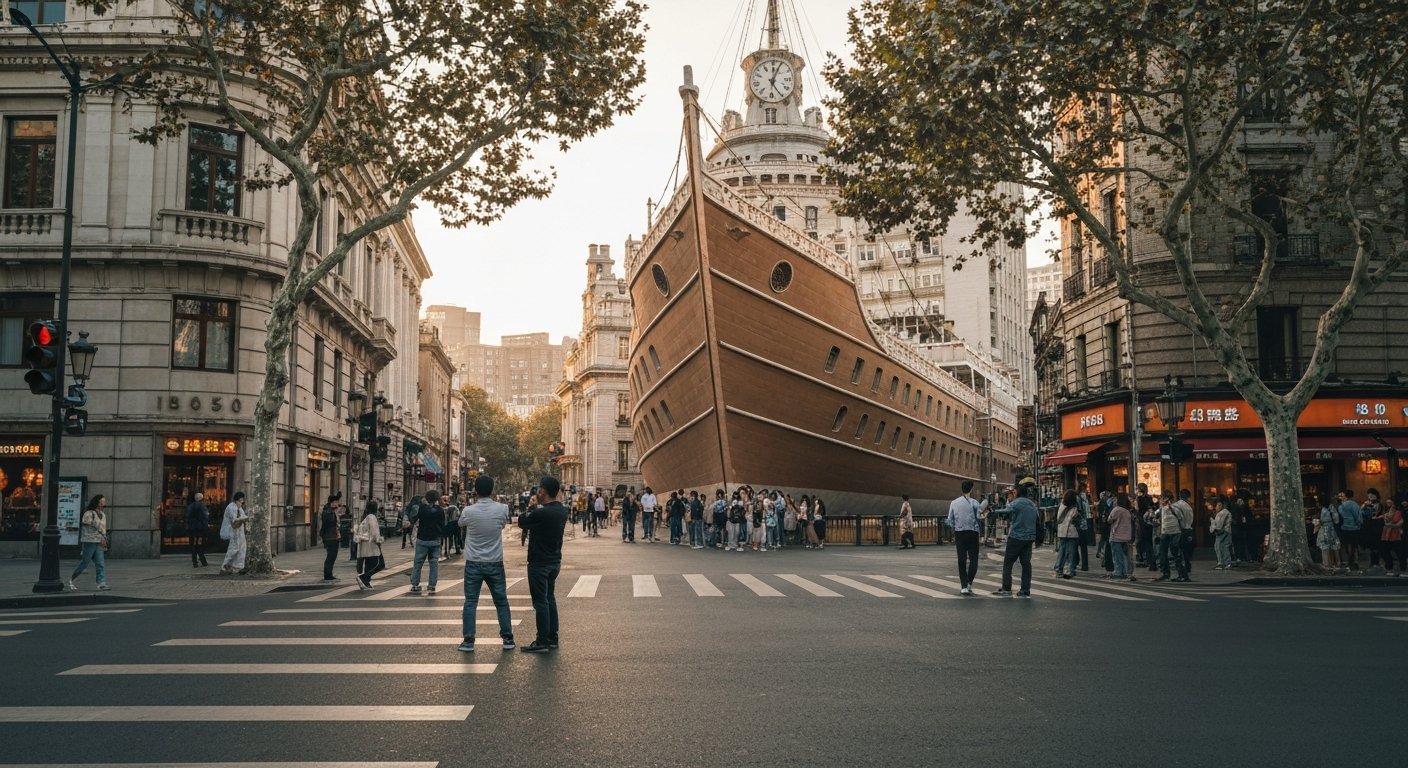
The symbol everyone photographs is the Wukang Mansion at 1850 Huaihai Middle Road, the ship-prow apartment block designed by the Hungarian-Slovak architect László Hudec and completed in 1924 as the Normandie Apartments. It is Shanghai’s oldest veranda-style building, and by golden hour the junction around it fills with people waiting for the light to soften. The building looks almost nautical from one angle, then severe and elegant from another, as if the city had briefly decided to build a ship out of brick and leave it permanently ashore.
From there Wukang Road runs north for just over a kilometre under a canopy of plane trees, past more than fifty protected historic buildings. One of the most quietly moving is the former residence of the writer Ba Jin at No. 113, an English garden-style house where he lived for nearly half a century. The street has the kind of scale that makes you lower your voice without meaning to. Scooters pass. Cicadas thrum in summer. A delivery rider leans briefly against a wall. Then the shade closes again and the road returns to itself.
The concession’s other signature is what it has become in daily life: the place Shanghai goes when it wants character over scale. Anfu Road, Wulumuqi Road and Fuxing Road carry a density of cafes, bistros, wine bars and independent boutiques that feels almost unfair to the rest of the city. Fuxing Park keeps its formal French garden layout from 1909, and the whole quarter is compact enough to cross on foot, which is exactly how it should be seen.
Plan your Shanghai trip
Live prices from our booking partners.
Guests & rooms
Free cancellation on many rooms. We may earn a commission when you book.
Where to eat & drink
This is one of Shanghai’s densest and most varied eating grounds, and the pleasures are not arranged by cuisine so much as by mood. Some rooms are old and tightly run, some are glossy and designed within an inch of their lives, and some are simply good enough that you forgive the queue.
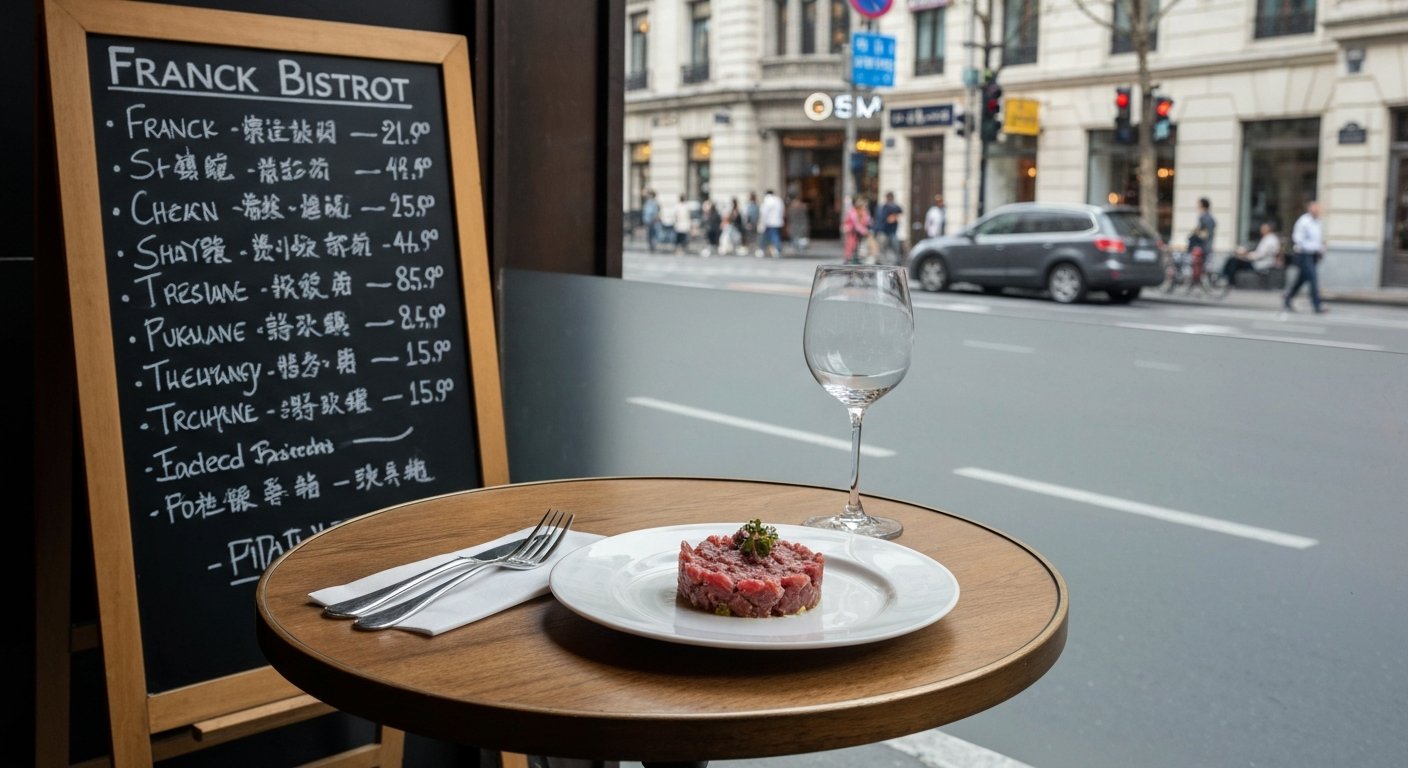
At Franck Bistrot, 376 Wukang Road, the mood is old-school in the best sense: a proper French street bistro, menu chalked on a blackboard, the room anchored by the beef tartare that locals cite as the city benchmark. The French-led wine list is serious without being theatrical, and the whole place feels like it belongs to the street rather than to a concept deck. It is the sort of room that rewards a long lunch and a second glass.
For Shanghainese home cooking, Old Jesse at 41 Tianping Road is the cramped, perpetually booked-out institution that people rate above all others. The dishes that matter are the braised pouch of pork, the scallion-oil fish head and the crab-roe rice. It is not a place for lingering over the architecture of the room; it is a place for understanding how much appetite this neighbourhood still has for its own local food traditions.
Lost Heaven, at 38 Gaoyou Road, shifts the register completely. Housed in a 1920s villa, it serves Yunnan folk cuisine — the food of the Dai, Bai, Yi and Naxi peoples of the old tea-horse road — in one of the most atmospheric rooms in the district. The tribal-craft interiors could easily become costume in lesser hands, but here they feel like part of the meal’s storytelling, a reminder that the concession’s culinary life reaches far beyond the French label attached to its streets.
The modern end of the spectrum is just as strong. The Merchants at 52 Yongfu Road occupies a restored three-storey villa and brings wood-fire grilling, dry-ageing, house charcuterie, a cafe and a cocktail bar under one roof. It is a design destination as much as a dinner, the kind of place where the building and the menu are both doing part of the work.
Coffee is the concession’s daily religion. RAC on Anfu Road is a French-owned crêperie and natural-wine bar with a leafy courtyard; by day it is all galettes and easygoing caffeine, by night it tilts into wine. Baker & Spice, also on Anfu Road, offers sourdough, cinnamon rolls, all-day brunch and terrace seating. Sunflour, on the same street, is the neighbourhood bakery known for its almond-studded Little Sun bread and pastries. And %Arabica on Wukang Road is the minimalist specialty-coffee outpost that draws a permanent queue, partly for the coffee and partly because the historic facades behind it make every cup look better than it probably has any right to.
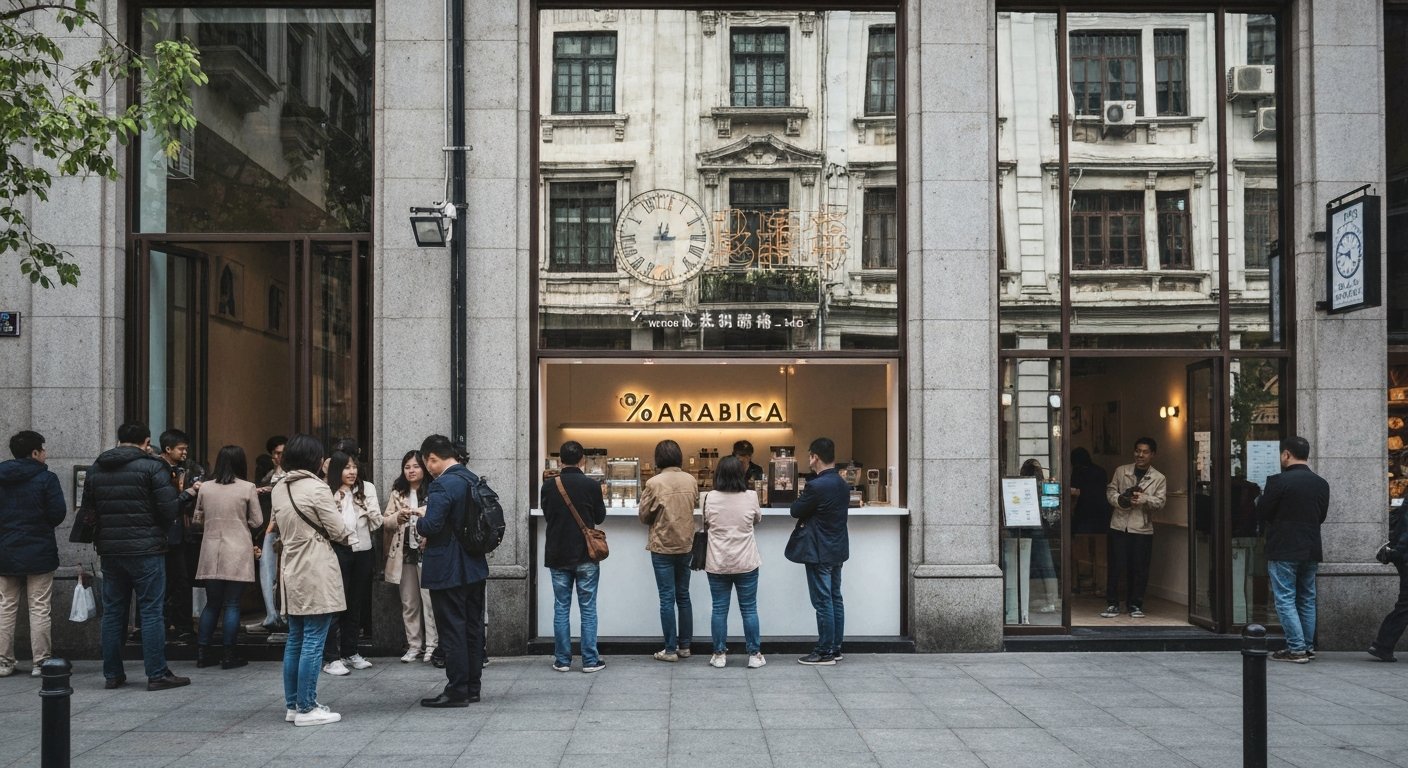
Anfu Road is where the concession’s daytime rhythm is easiest to feel. You can start with a crêpe at RAC, move to a loaf at Sunflour, and end up on a terrace at Baker & Spice watching the street fill with people who seem to have nowhere urgent to be. That is not laziness. It is the neighbourhood’s operating system.
Going out
The concession is Shanghai’s best neighbourhood for a slow bar crawl, and many of its strongest rooms hide behind doors with no sign. The local joke is that you find the good bars by knowing where they are. That is not a joke so much as a map.
Speak Low at 579 Middle Fuxing Road is the textbook example: Shingo Gokan’s four-floor speakeasy, hidden behind a bar-equipment shop, and a fixture on the World’s 50 Best Bars list since it opened in 2014. It still feels like the template every other Shanghai bar measures itself against. The ascent through the floors gives the place its own rhythm, as if the night is being layered rather than simply served.
A few streets west, EPIC at 17 Gaoyou Road is Cross Yu’s three-floor bar with a rooftop terrace and a menu themed on Chinese cities. It ranked on Asia’s 50 Best Bars 2025, but the more important fact is the energy: ground-floor bar, lounge, rooftop, each level carrying a different temperature. It is the sort of place that makes the concession feel like a city within a city after dark.
COA, spread across four floors of a lane house on Middle Fuxing Road, is the agave temple: tequila, mezcal, taqueria, cantina, salon and mezcaleria stacked on top of each other. The building itself becomes part of the argument for the drink list. You move upward, and the room changes with you.
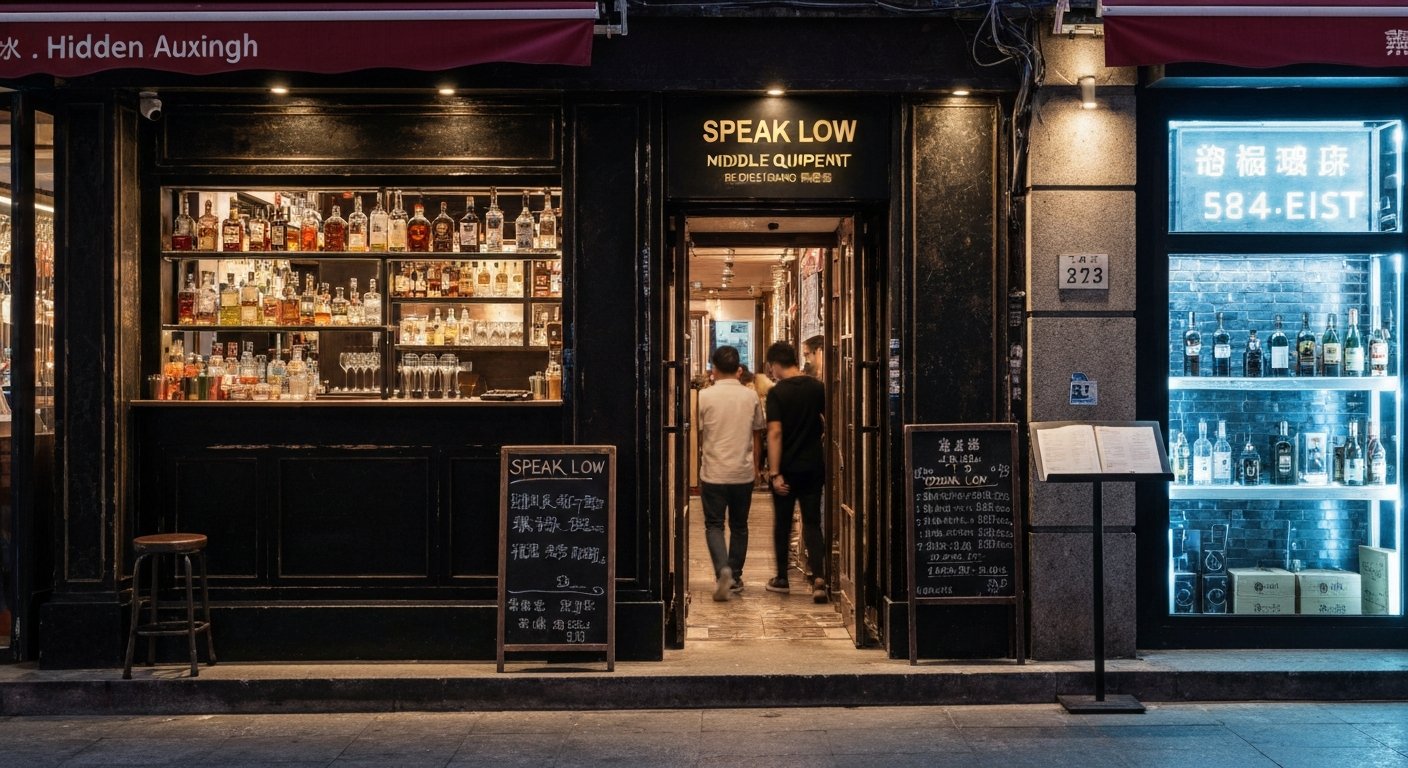
Senator Saloon keeps to a different register altogether, with red wallpaper, old-time jazz and a deep American whiskey list. Union Trading Company on Hengshan Road is the American-style cocktail saloon with the signature Shanghai Breakfast and barrel-aged classics. Bar Leone Shanghai, in Sinan Mansions, brings the second outpost of the Hong Kong original that topped the World’s 50 Best Bars in 2025: Italian aperitivo downstairs, spirit-forward drinks upstairs in a 1970s Italian living-room mood. La Vite, with its cosy Italian wine-bar energy, brick-oven pizza, cold cuts and fair Italian list, appears in several side streets across the concession and suits the kind of evening that begins with one glass and politely refuses to end there.
What makes this nightlife different from the city’s club districts is its patience. These are bars for conversation, for moving between rooms, for letting the night stretch rather than spike. The clink of aperitivo glasses spills onto the pavement. A door closes. Someone laughs on a stair landing. The street outside stays calm.
Things to do / what to see
The best thing to do here is also the simplest: walk Wukang Road end to end. Start at the Wukang Mansion, best photographed early before the golden-hour crowds arrive, and drift north under the plane trees past the garden villas and Ba Jin’s former residence at No. 113, which is free to enter and closed Mondays. Duck into whatever cafe or boutique catches your eye. The street is a slow reveal, not a route to be conquered.
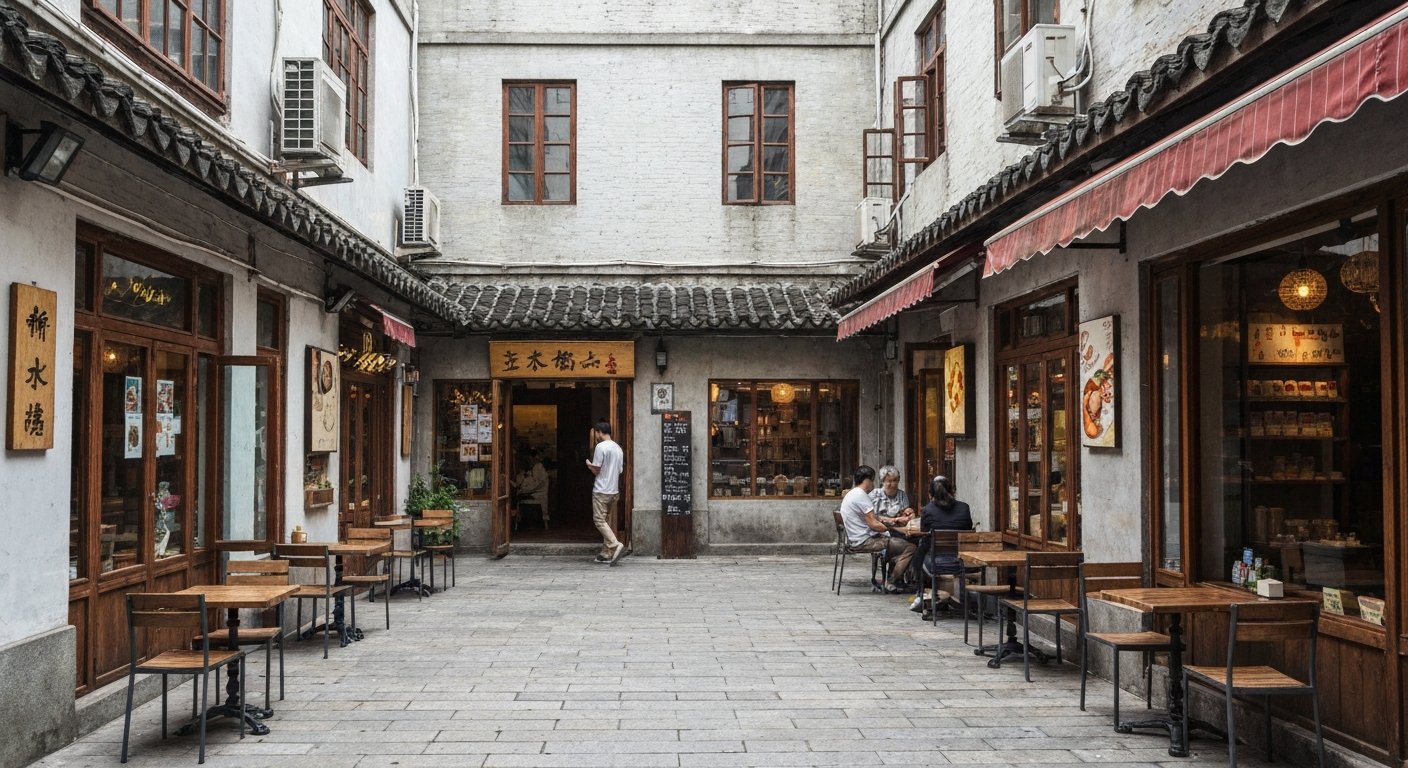
Halfway along sits Ferguson Lane at 374–378 Wukang Road, a converted courtyard of small galleries, shops and cafes worth a detour off the main street. It is one of those places that makes the concession feel especially lived-in: a courtyard that has not been flattened into a mall, but allowed to remain a cluster of small discoveries.
To the east, Fuxing Park keeps its formal French garden layout from 1909 and remains one of the loveliest green spaces in central Shanghai. It is free, and in the morning locals come to dance, play cards and practise tai chi among the rose gardens and tree-lined allées. The park has a civic grace that feels almost old-fashioned now, which may be why it survives so well. People still know how to use it.
Beside it, Sinan Mansions is a restored estate of 1920s–40s garden villas now home to boutiques, cafes and bars, including Bar Leone. The pleasure here is in wandering the cobbled lanes between facades, noticing how the scale changes from one villa to the next. Nearby, the former residence of Zhou Enlai on Sinan Road preserves the modest house used as the Shanghai Communist Party base in 1946. It is a different kind of historical intimacy from the villas and bars, but it belongs to the same city: one that keeps layering its past without quite erasing it.
Don’t miss in Former French Concession (FFC)
Wandering the quiet residential stretches of Wukang Road and Fuxing Road.
Browsing independent design shops on Julu Road.
Stopping for a pour-over coffee at one of the hundreds of micro-cafes.
Shopping & markets
Shopping in the Former French Concession is boutique and browse-led, not mall-scale. The fun is in the independent shops threaded through the villa streets, the places you stumble into because the window looked interesting or because the building itself seemed to be asking for a closer look.
Anfu Road is the most concentrated stretch. It mixes homegrown fashion labels, concept stores and lifestyle shops with cafes and wine bars, so the street never feels like only one thing for long. 13DE MARZO has its viral teddy-bear cafe-boutique here, Harmay stocks cosmetics in an industrial-cool warehouse-style space, and Deja Vu is the popular second-hand bookshop and vintage-clothing store that made recycling stylish in Shanghai. None of these are large enough to overwhelm the street, which is part of their appeal; they sit inside the grain of the neighbourhood rather than above it.
Wukang Road and the lanes off it carry more of the same: small design studios, homeware, galleries and one-off boutiques set into ground-floor villa spaces. Ferguson Lane bundles a cluster of them into a single courtyard. This is not a district for a shopping list. It is a district for serendipity, for independent Chinese designers, imported and vintage pieces, and beautifully merchandised little shops where the building is half the appeal.
Where to stay in the Former French Concession
The concession is the most romantic base in Shanghai, and it suits anyone who would rather wake up among plane trees and cafes than under the skyline. The character stays here are boutique hotels and design guesthouses in converted villas and lane houses, so the emphasis is on charm, walkability and food and drink on the doorstep rather than five-star towers or river views.
The sweet spot for first-timers is the Wukang Road, Anfu Road and Wulumuqi Road cluster in Xuhui. You are in the middle of the cafes, bistros and bars, a short walk to Changshu Road and Shanghai Library metro, and it is genuinely quiet at night. The eastern edge around Sinan Mansions, Fuxing Park and Xintiandi puts you closer to the metro and the malls while keeping the villa-lane feel, and it is handy for the Bund and People’s Square. Wherever you land, this is a walking neighbourhood: pick somewhere on or just off the leafy streets, not on a main traffic artery, and you will be steps from everything above.
Hotels in Former French Concession (FFC)
Our best-rated stays in this neighbourhood. Prices are approximate “from” rates — confirmed at the provider when you continue. We may earn a commission if you book through our partners — at no extra cost to you.
In this area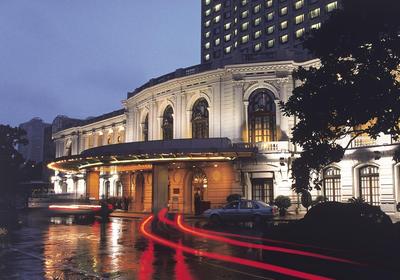 In this area
Former French Concession (FFC)
Okura Garden Hotel Shanghai
8.7· 1,129 reviews
approx. from£233 / nightSee prices
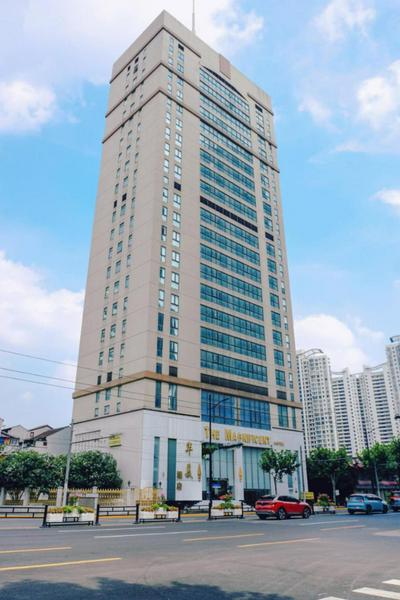 In this area
Former French Concession (FFC)
Magnificent International Hotel
7.8· 1,998 reviews
approx. from£66 / nightSee prices
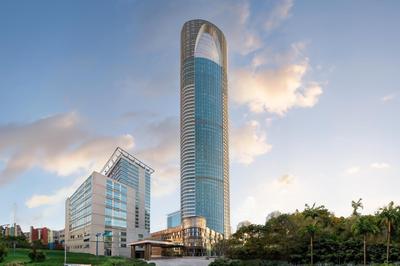 In this area
Former French Concession (FFC)
Pullman Shanghai Central
8.6· 759 reviews
approx. from£153 / nightSee prices
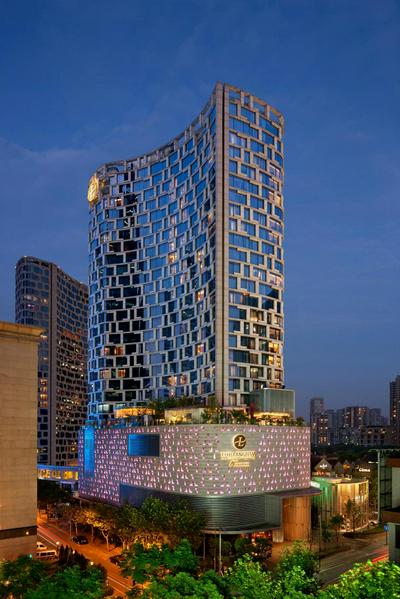 In this area
Former French Concession (FFC)
The Langham, Shanghai, Xintiandi
9.8· 1,830 reviews
approx. from£399 / nightSee prices
 In this area
Former French Concession (FFC)
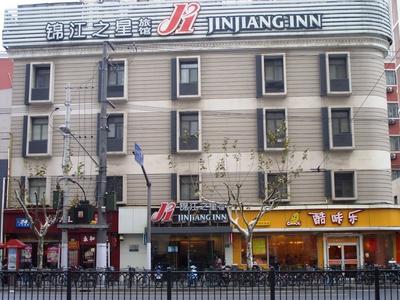
Jinjiang Inn Shanghai Lujiabang Road
6.8· 19 reviews
approx. from£40 / nightSee prices
 In this area
Former French Concession (FFC)
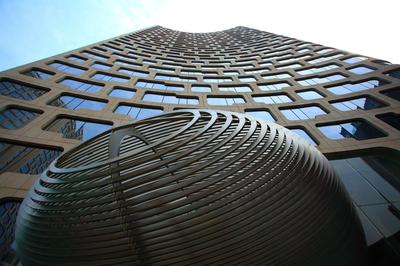
Andaz Xintiandi, Shanghai, By Hyatt
8.6· 534 reviews
approx. from£273 / nightSee prices
 In this area
Former French Concession (FFC)
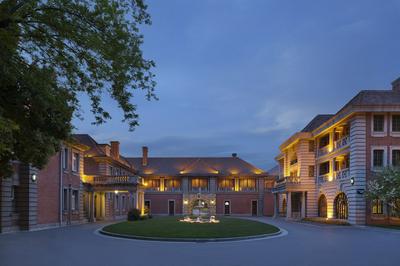
InterContinental Shanghai Ruijin by IHG
8.8· 105 reviews
approx. from£303 / nightSee prices
 In this area
Former French Concession (FFC)
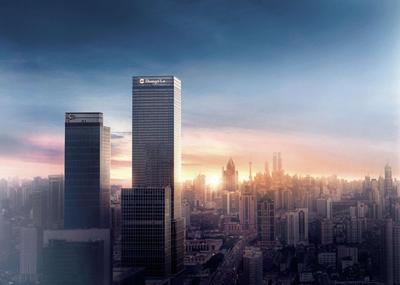
Jing An Shangri-La, Shanghai
9.8· 584 reviews
approx. from£306 / nightSee prices
 In this area
Former French Concession (FFC)
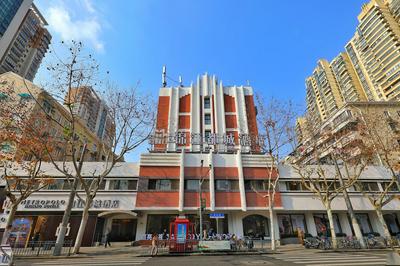
Jinjiang Metropolo Shanghai Xintiandi Hotel
9.0· 20 reviews
approx. from£65 / nightSee prices
Getting around
Walk. The concession is compact, flat and shaded, and the whole point is to cover it on foot. The prettiest lanes are exactly the ones that are not next to a metro exit, which is why the district keeps its sense of discovery even when you know it well.
Several Shanghai Metro lines ring the district: Line 1, 7 and 10 all interchange at Changshu Road, roughly the concession’s centre; Line 10 also stops at Shanghai Library and Jiaotong University to the west, and at South Shaanxi Road and Xintiandi to the east, where it meets Line 1. Fares are cheap, trains are fast and clean, and everything is signed in English. Grab a transit QR code in Alipay or WeChat, or an Apple or Android transit card, and you can tap straight through.
Above ground, Didi is the easy way to bridge the gaps between metro stops, and shared bikes are everywhere for short hops under the trees. People’s Square and the Bund are about 15 to 20 minutes east by metro or taxi. Hongqiao airport is roughly 20 to 30 minutes by taxi or a straightforward Line 10 ride, while Pudong International is farther out to the east and needs more time, whether you go by taxi or use the metro and Maglev combination.
The reason the Former French Concession keeps winning people over is that it asks for no performance. You can spend a day here with a coffee, a lunch, a bar, and a long walk between them, and still feel as though you have only followed the district’s own pace. That is the luxury it offers: not spectacle, but time.
Gallery
Former French Concession (FFC) in pictures
Former French Concession (FFC) — your questions
Is the Former French Concession a good area to stay in Shanghai?
Yes. It is the city’s most charming and walkable base, especially if you value character over skyline views. You get tree-lined villa streets, the best concentration of cafes, bistros and cocktail bars in Shanghai, and quiet nights, all within a short metro ride of the Bund and People’s Square. The trade-off is that you are across the river from Pudong’s towers and observation decks, and the prettiest stays sit a walk from the nearest metro.
What is the French Concession known for?
Plane-tree-lined streets, historic garden villas and Art Deco apartment blocks — with the ship-shaped Wukang Mansion as the icon — plus Shanghai’s richest food-and-drink scene. Think French and Shanghainese bistros, Yunnan cooking, natural-wine bars, specialty coffee and hidden cocktail rooms like Speak Low and EPIC. It is a low-rise, romantic quarter built for walking rather than a place of big ticketed sights.
Is the French Concession safe at night?
Very. Shanghai is among the safest large cities in the world, and the concession is a relaxed residential quarter where walking home late between bars is normal. It is speakeasies and wine bars, not clubs, so the main thing to watch is the usual care with your phone and wallet in the daytime tourist crowds around the Wukang Mansion.
How many days do you need in the Former French Concession?
You can get a strong feel for it in a day on foot, but two days lets you do it properly: one for Wukang and Anfu Roads, coffee and shopping; another for Fuxing Park, Sinan Mansions, lunch, and a slow evening bar crawl.