 In this area
The Shanghai issue
Jing'an, Shanghai: temple bells, luxury malls and lane-life on one block
In Jing'an, Shanghai, a 1,700-year-old temple and a Louis Vuitton flagship face each other across West Nanjing Road, setting the tone for a district where old Shanghai, new money and everyday lane life share the same walkable grid.
By Liang WeiReading Shanghai one lane at a time
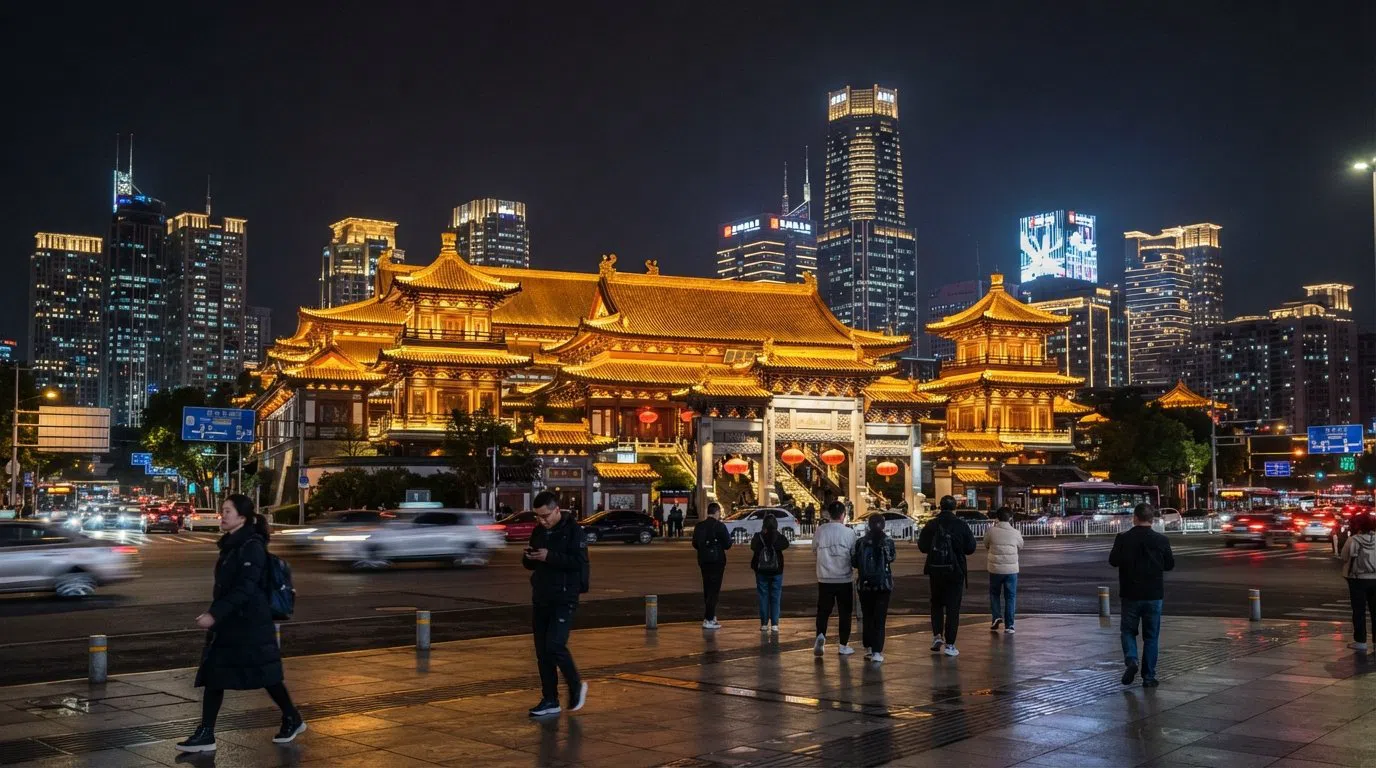
A 1,700-year-old Buddhist temple with a 3.8-metre jade Buddha sits directly across the road from a Louis Vuitton flagship, a Shake Shack and the entrance to three metro lines. That single intersection is the whole argument for Jing'an: the oldest and newest versions of Shanghai stacked on the same block, walkable and unhurried between them. On one side, incense and floodlit gold roofs; on the other, glass, escalators and the soft churn of a district that has made peace with being expensive, central and very good at getting on with the day.
What Jing'an is known for
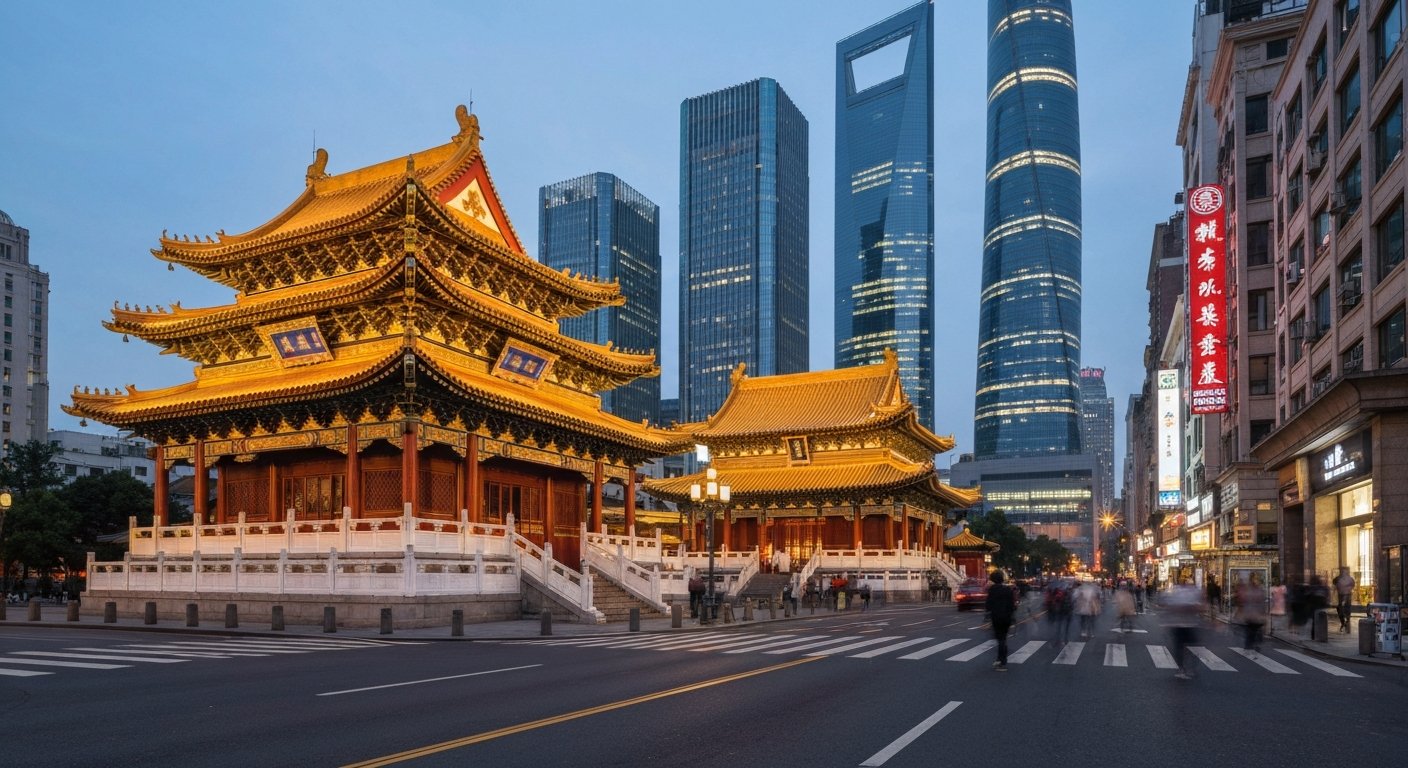
Jing'an is the part of Shanghai that feels most like a working arrangement between prestige and practicality. Its name comes from Jing'an Temple, and the temple still gives the district its pulse: bells, visitors, office workers cutting across West Nanjing Road, people pausing for a photograph before disappearing into the metro. The present halls are Song-style reconstructions, but the place itself goes back more than 1,700 years, which is long enough to make the surrounding mall district seem like a temporary gloss. Inside the Mahavira Hall sits one of mainland China's largest jade Buddhas, and the admission is around CNY 50, with interior hours roughly 07:30–17:00. The best moment is dusk, when the complex is floodlit gold and the towers around it turn cool and reflective, as if the city has briefly agreed to lower its voice.
The district's other defining feature is retail, and not in a vague, generic way. West Nanjing Road is Shanghai's luxury artery, a long corridor of malls and flagships that makes the area feel almost self-contained. Jing'an Kerry Centre, Réel and Jiuguang/Sogo line the road, while Zhangyuan — the restored late-19th-century shikumen block — has become the most compelling retail address in the neighbourhood precisely because it is not a blank slate. The western section reopened in 2022 with Louis Vuitton, Dior and other flagships tucked into old brick facades, and further sections are still opening through 2025–26. Jing'an's appeal lies in that friction: you can stand in a lane house courtyard and look at a luxury storefront through the same frame.
North of the old district line, the mood changes again. The former Zhabei side brought in greener, more civic spaces like Jing'an Sculpture Park and the Shanghai Natural History Museum, whose spiral building opened in 2015. This is why Jing'an works so well as a base. It is moneyed, yes, but not frantic. It is central, but not showy about it. The crowd skews polished rather than flashy: expats who've been here a decade, Chinese professionals, travellers who have decided that being able to walk to dinner matters more than sleeping beside a skyline.
Plan your Shanghai trip
Live prices from our booking partners.
Guests & rooms
Free cancellation on many rooms. We may earn a commission when you book.
Where to eat & drink
Jing'an eats in layers. You can start with a snack that costs only a few yuan and end the night in a mahogany cocktail room behind an unmarked door. The district has no patience for food being only one thing.
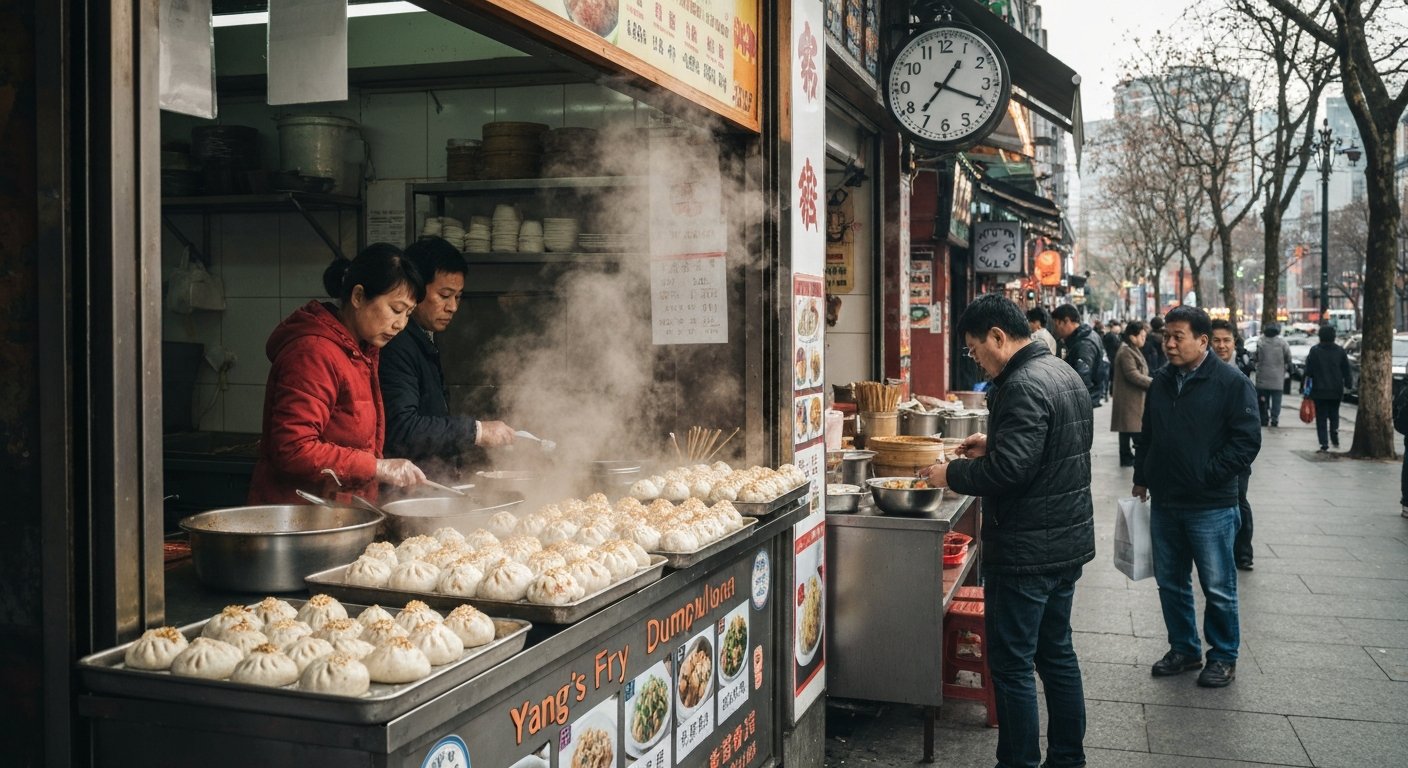
Wujiang Road is the easiest place to understand that. It is a short pedestrian food street a step from West Nanjing Road metro, and Yang's Fry Dumpling — Xiao Yang Sheng Jian, at No. 269 — is the classic stop. The brand began here as a street stall in 1994, and the shengjianbao still arrive in the form Shanghai knows best: sesame-topped, crisp-bottomed, soup-filled, with the sort of heat that demands you wait a second before biting. It is the kind of breakfast-or-lunch stop that makes the surrounding luxury feel less absurd, because in Jing'an the cheap and the expensive are never far apart.
For a proper sit-down, Legend Taste on Kangding Road is one of the district's most dependable long lunches. It is a no-frills Yunnan spot in the Michelin Guide selection, and the appeal is all in the depth of the cooking: wild mushrooms, herbs, slow-cooked beef broth, a menu that feels rooted rather than staged. The semi-covered terrace is especially coveted, the sort of place where the city softens a little around the edges and the meal stretches without needing to announce itself.
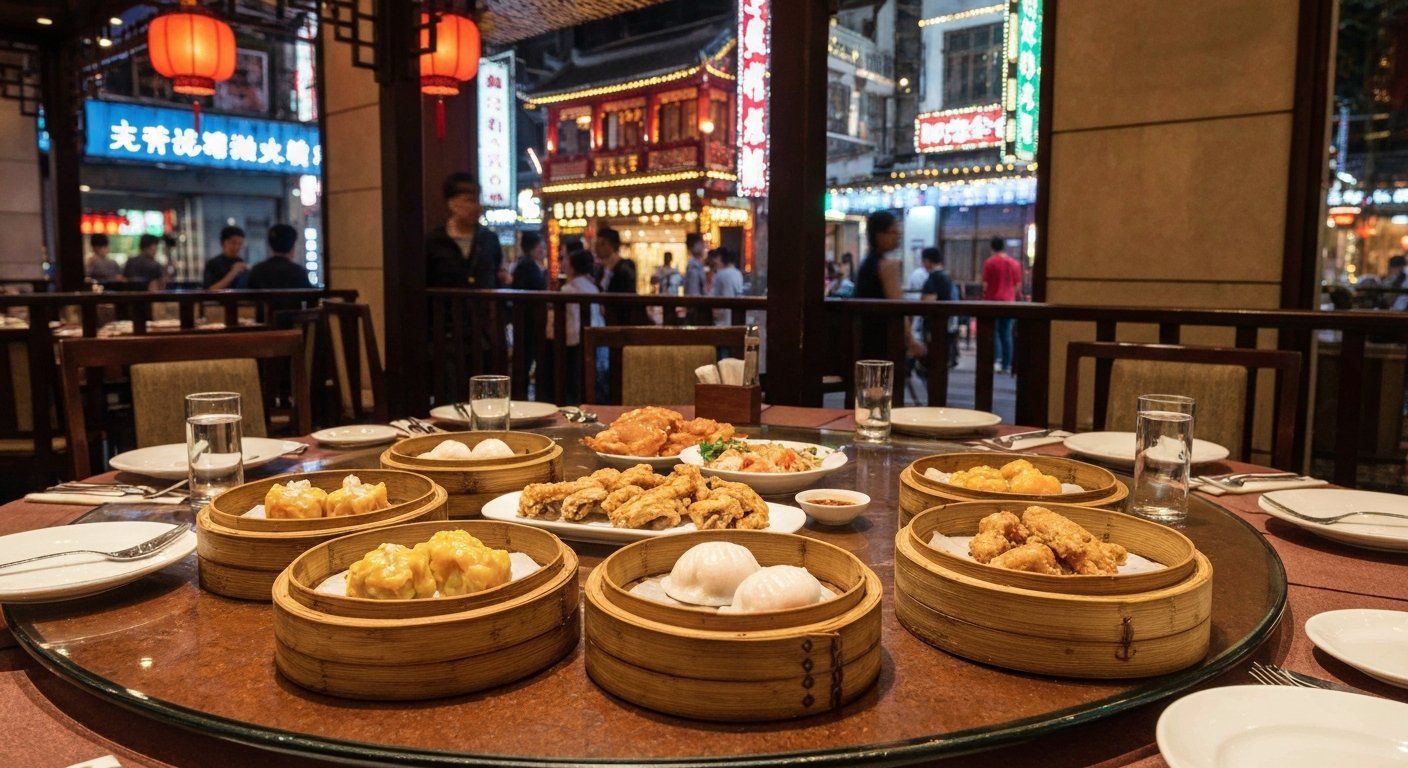
Inside the malls, Jing'an proves that convenience does not have to mean compromise. Seventh Son, or 家全七福, relocated to Weihai Road in early 2025 and remains a one-Michelin-star Cantonese and dim sum room with the pedigree to match. It comes from the Hong Kong family behind Fook Lam Moon, and the kitchen still turns out legendary crispy chicken and a 30-plus lunchtime dim sum list. If you want a meal that feels like a polished Shanghai lunch in the old sense — formal but not stiff, exacting but generous — this is the sort of room Jing'an does well.
Beef & Liberty at the Shanghai Centre, 1376 West Nanjing Road, takes a more casual route without dropping standards. It grinds New Zealand grass-fed beef in-house twice daily for its burgers and has held a Michelin recommendation for years. That matters in Jing'an, where casual often means merely less ceremonious, not less careful. And if you want the district's most reliable mall-floor comfort food, Jing'an Kerry Centre has the dependable crowd-pleasers: Din Tai Fung, Shake Shack and the robatayaki grill Takumi. This is not a neighbourhood that asks you to choose between street food and mall dining. It expects you to do both.
Going out
Jing'an drinks well rather than loudly. That distinction is important. This is not a district built for the kind of nightlife that spills into dawn; it is built for conversations that begin after dinner and end before the city turns feral. The best bars hide behind plain doors, and the best room is often the one that does not look like a room at all.
J. Boroski on Fumin Road, at No. 179, is the signature example. It is reservation-first and no-menu, run on Joseph Boroski's bespoke model: you tell the bartender what you are into, and they build the drink around you. The mahogany bar and hidden entrance give it the feeling of a secret even once you are inside, which in a district as polished as Jing'an is a useful kind of intimacy. It is not trying to be the loudest place in the room. It is trying to be the most attentive.
Botanical Basket on Wuding Road is lower-key and greener, built around house infusions, foraged botanicals and herb-forward gins and vodkas. It is the sort of place you settle into for two rounds rather than a crawl, and that feels right for Jing'an, where the evening tends to taper rather than detonate. The district's best nights are measured in conversation, not volume.
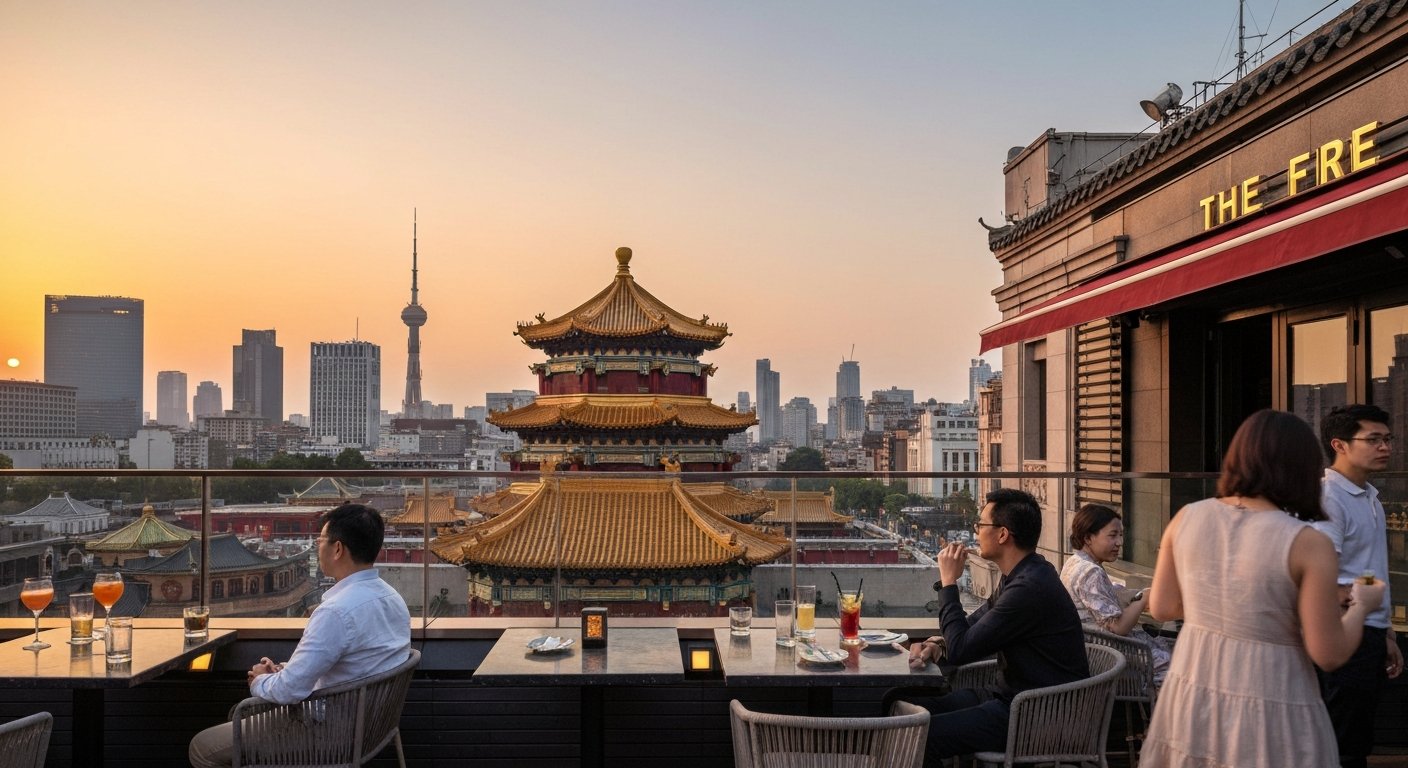
For a drink with a view, THE FIRE on the fifth floor of Réel Mall, 1601 West Nanjing Road, gives you the opposite of secrecy: a 400-square-metre rooftop terrace looking straight across at Jing'an Temple's gold roofs. At sunset, the temple becomes the centre of the frame and the mall becomes almost invisible, which is a neat trick for a neighbourhood that has made a business of juxtaposition.
Hotel bars fill out the rest of the evening. The Long Bar at The PuLi runs the length of the lobby with garden views over Jing'an Park. The hotel is closed for renovation from late 2025 into mid-2026, so it is one to check before planning around, but it remains part of the district's drinking memory: long, calm, and a little removed from the retail rush outside.
Things to do
The pleasure of Jing'an is not that it overflows with landmarks. It is that the district rewards slow walking. You can cross from temple to park to lane-house block without feeling as though you have left the same neighbourhood, even though each stretch seems to belong to a different Shanghai.
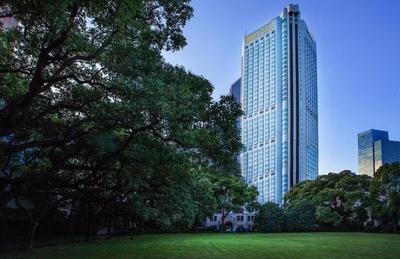
Jing'an Park, right on West Nanjing Road, is the easiest reset button. Opened in 1954, it is a compact Jiangnan-style garden with lawns, old camphor trees and a teahouse, a genuine breather between shopping stretches. The park is not grand, and that is its virtue. It gives the district a human scale, a place where people sit rather than pass through. In a corridor of malls, that matters.
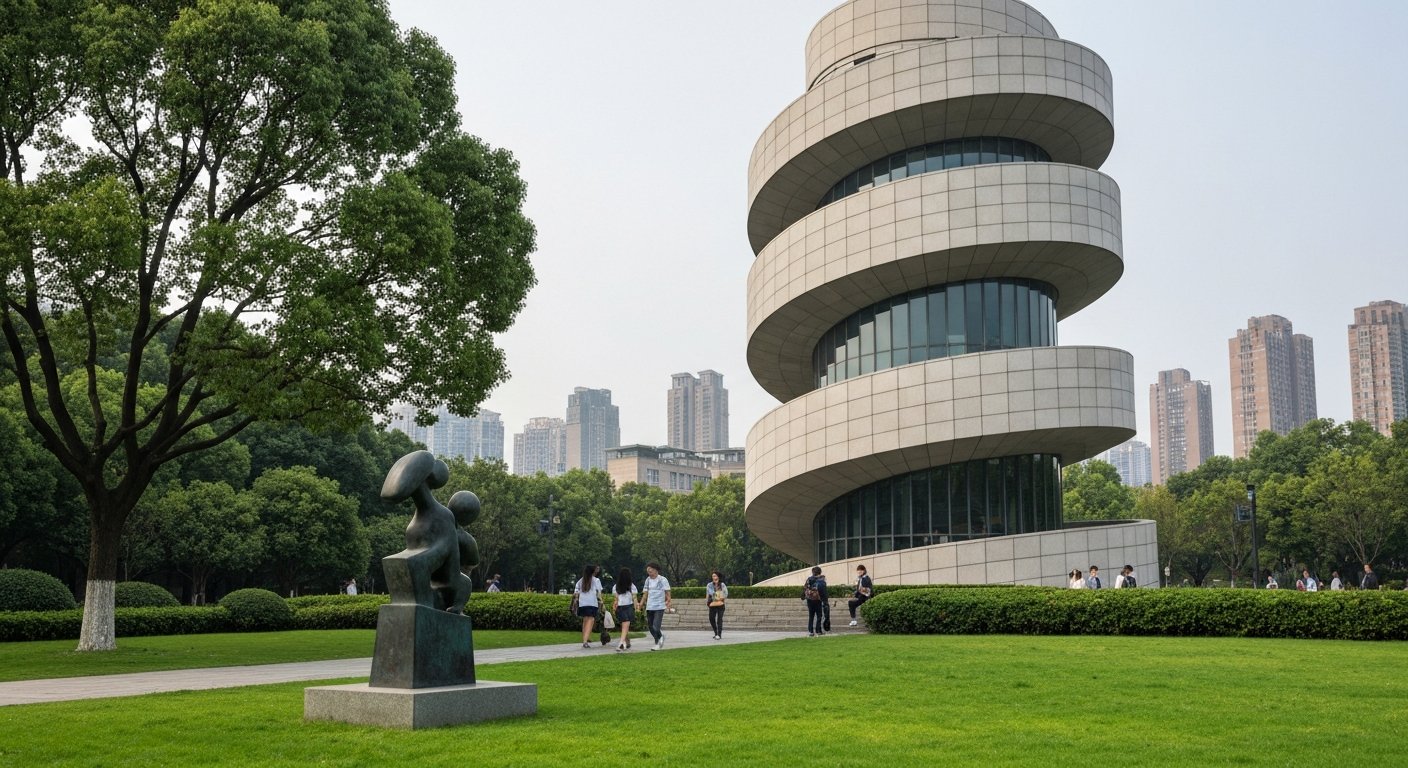
A short way north, Jing'an Sculpture Park and the Shanghai Natural History Museum pull the neighbourhood toward a more civic, family-friendly register. The park is a green strip studded with rotating international sculpture, while the museum's spiral, nautilus-inspired building holds well over 200,000 specimens across dinosaurs, taxidermy and minerals. It is an easy, air-conditioned few hours, especially with kids, and a useful reminder that Jing'an is not only about consumption. It also knows how to make room for curiosity.
Then there is Zhangyuan, the place where Jing'an's argument becomes visible in brick and stone. Even if you buy nothing, it is worth an unhurried loop. The restored shikumen alleys, brick arches and courtyards are among the best-preserved in the city, now threaded with cafes and flagship stores. It is one of those rare retail quarters where walking remains the main event. The lane texture survives under the gloss, and that is what makes it feel alive rather than merely branded.
Don’t miss in Jing'an
Visiting the gilded Jing'an Temple amidst the shopping malls.
Exploring the restored shikumen lanes of Zhangyuan.
Dining at the international bistros along Wuding Road.
From Zhangyuan, the city opens out with almost no effort. People's Square and the museums are one metro stop east. The Former French Concession's plane-tree streets are a short walk south. This is the quiet advantage of Jing'an: it places you in the middle of the city without forcing you to perform the middle. You can drift.
Shopping
West Nanjing Road is Shanghai's shopping heartland, but the district's retail character is more layered than the phrase suggests. Yes, there are the big luxury malls — Jing'an Kerry Centre at 1515 West Nanjing Road, Réel at 1601, Jiuguang/Sogo and the Shanghai Centre at 1376 — and they do what they are supposed to do: connect international fashion, beauty and department-store basements in a way that is merciful in a Shanghai summer. You can move under cover, from one air-conditioned block to the next, without feeling as though you have surrendered the day to the weather.
But the more distinctive shopping is at Zhangyuan. Here, houses such as Louis Vuitton, Dior and Vacheron Constantin have taken over restored shikumen buildings, and in 2024 the block even became the first heritage site in China to run a bonded warehouse for luxury launches. That is very Jing'an: the heritage is real, the commerce is real, and the two are made to coexist rather than politely ignore each other. Even browsing feels pleasant here, which is not something one says often about luxury quarters.
Off the main road, the lanes around Wuding Road and Yuyuan Road hide smaller boutiques, concept stores and coffee roasters. These streets are where Jing'an loosens its tie. The pace drops, the facades get lower, and the district stops advertising itself quite so loudly. For daily needs, there is little drama: Olé in the Kerry Centre covers groceries, and the food halls in the mall basements handle quick bites without leaving the block. It is a district that understands the value of convenience, but it also knows that convenience can be made elegant.
Where to stay in Jing'an
Jing'an is, on balance, the most sensible first-time base in Shanghai. It is central, calm and superbly connected, and that combination is hard to beat if you want to spend more time walking than transferring. The West Nanjing Road corridor around the temple is the luxury cluster, where five-star towers with skyline views sit steps from the metro and room rates run highest. This is the part of the neighbourhood that suits travellers who want to come back from dinner without thinking about logistics.
A short way south, the design-led PuLi Hotel on Changde Road overlooks Jing'an Park and is worth knowing about, though it is closed for renovation from late 2025 into mid-2026, so confirm before you book around it. For something quieter and cheaper, look to the lanes and low-rise streets a block or two off the main road, near Jing'an Park or Wuding Road, where boutique hotels and serviced apartments trade skyline views for leafy calm. Budget travellers should note that the immediate temple blocks are pricey; staying a short walk out, toward the northern park-and-museum zone or the Xuhui edge, keeps the same easy transit while easing the cost.
Hotels in Jing'an
Our best-rated stays in this neighbourhood. Prices are approximate “from” rates — confirmed at the provider when you continue. We may earn a commission if you book through our partners — at no extra cost to you.
In this area In this area
 In this area
 In this area
 In this area
 In this area
 In this area
 In this area
 In this area
 In this area
 In this area
 In this area
Jing'an
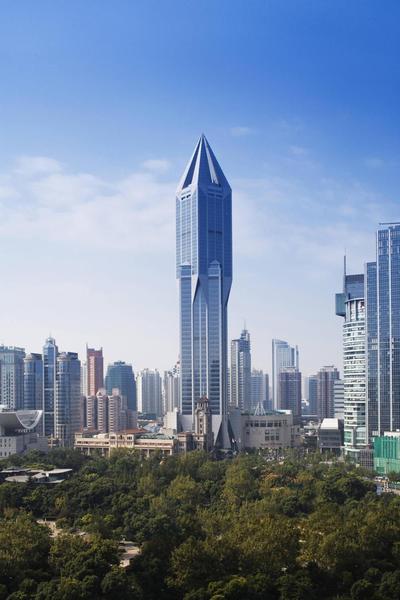
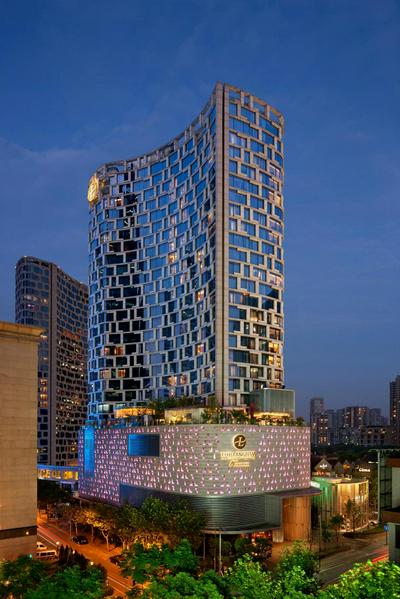
THE ONE Shanghai Downtown, Vignette Collection by IHG
8.8· 530 reviews
approx. from£214 / nightSee prices
The larger point is that Jing'an rewards a sensible kind of luxury: not excess for its own sake, but the comfort of being able to move through the city without friction. In Shanghai, that is a real amenity.
Getting around
Jing'an Temple station is the neighbourhood's hinge, an interchange for metro Lines 2, 7 and 14. Line 2 is the workhorse. It runs east through People's Square, East Nanjing Road and Lujiazui, and continues all the way to Hongqiao Airport and railway station in one direction and Pudong International Airport in the other, which means both airports are a single-line ride, though you should allow roughly an hour-plus to Pudong. West Nanjing Road station, one stop east on Line 2, puts you at the Wujiang Road and Zhangyuan end of the district.
Within Jing'an, everything of interest is flat and walkable. Temple to park to Zhangyuan is a comfortable stroll, and the Former French Concession and People's Square are both within a 15–20 minute walk. Taxis and Didi are cheap and plentiful, though the West Nanjing Road corridor clogs at rush hour, when the metro is faster. That is the rhythm of the district in miniature: walk when you can, ride when you must, and never underestimate how much of Shanghai becomes legible once you stop trying to cross it too quickly.
Jing'an is not the Shanghai of postcards or party districts. It is the Shanghai of practical elegance, of temple bells under mall escalators, of a lunch that can be either shengjianbao or Michelin-starred dim sum, of a neighbourhood where the city keeps two timelines visible at once. The pleasure is not in choosing between them. It is in walking the block and seeing both.
Gallery
Jing'an in pictures
Jing'an — your questions
Is Jing'an a good area to stay in Shanghai?
Yes — for most first-time visitors, Jing'an is one of the best all-round bases. It is central, safe and calmer than the Bund, with Lines 2, 7 and 14 meeting at Jing'an Temple, so you can reach People's Square, Lujiazui and both airports with very little fuss. Room prices are mid-range to high, especially right on West Nanjing Road.
What is Jing'an best known for?
Jing'an is best known for Jing'an Temple, the gold-roofed monastery that gives the district its name, and for the luxury shopping along West Nanjing Road, especially the restored Zhangyuan shikumen block. It is also strong for food, from cheap shengjianbao on Wujiang Road to Michelin-listed restaurants in the malls.
Is Jing'an walkable, and how do I get to the Bund or the Former French Concession?
Very walkable. Jing'an Temple, Jing'an Park, Zhangyuan and the malls sit on a flat grid. The Former French Concession is about a 15–20 minute walk south. For the Bund, take Line 2 east to Nanjing Road East, which is about 10 minutes away by metro, then walk from there.
What kind of nightlife does Jing'an have?
Jing'an drinks well rather than loudly. Expect reservation-first cocktail bars like J. Boroski, botanical bars such as Botanical Basket, and hotel or rooftop drinks like THE FIRE. It is more about polished conversation than late-night clubbing.